

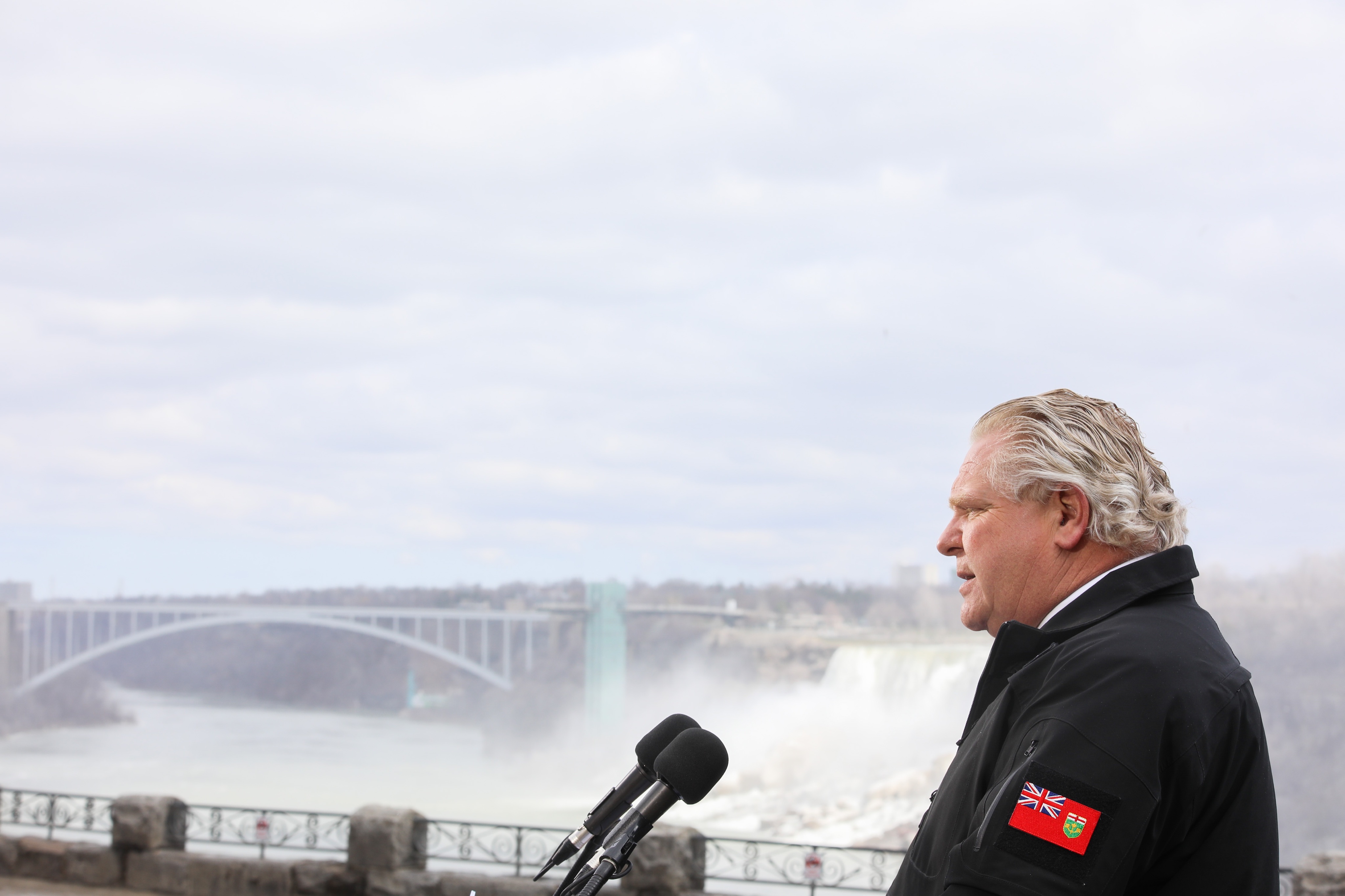
“You don’t have to be a rocket scientist to figure out we have too many politicians,” Premier Doug Ford told reporters in Niagara last month.

In Toronto, one member of City Council represents about 107,000 people. In Ottawa it is about 41,000. In Hamilton, about 35,500. In London, about 28,000. In Niagara, counting both local and regional councils, it is roughly one municipal elected official for every 3,800 residents. That’s crazy.
Niagara governs itself like a patchwork. It is 12 municipalities plus a regional government, meaning 13 governing bodies in one compact region, with 126 municipal elected officials. That is more municipal politicians in one region than there are MPPs in the entire province. The problem is not the people serving in these roles. The problem is a structure that blurs accountability and makes delay the easiest option.
This is not about “more local voice.” It is too much government for the size of the region, with too many decision makers and too many cooks in the kitchen. With that many tables to satisfy, delay becomes a strategy and accountability becomes a scavenger hunt.
I grew up in St. Catharines and can tell you firsthand: Niagara functions like one place. People live in one municipality, work in another, shop in a third. The housing market, roads, and water systems do not stop at a municipal line.
Niagara Region Chair Bob Gale has now put reform on the table and asked Niagara’s mayors to respond by March 3 so a preferred model can be advanced with the province. His two options are straightforward: a single city for all of Niagara, or a four-municipality model.
If we were designing Niagara today, the modern answer would be one Niagara, one city. One council with clear responsibility, one planning system, and one place where decisions get made and then acted on. It is the cleanest structure and the easiest for residents to understand.
But I am also a realist. Some communities will fight a single city model hard. Niagara-on-the-Lake’s lord mayor, Gary Zalepa, says he supports modernization but opposes any amalgamation that would absorb his town. I disagree with him, but ignoring that resistance is how you end up with no reform at all.
So if one city is not feasible in the near term, four municipalities is the sensible next step. Four is not perfect, but it is miles better than twelve, and it is workable.
Right now, duplication is baked in. Twelve municipalities means twelve political cultures and twelve administrative hierarchies. It means repeated senior management and repeated planning and building functions. Even when services are shared, friction remains because the default setting is siloed decision making.
You see the cost in housing and infrastructure. Projects that should move become negotiations across boundaries. When every major decision needs a dozen buy-ins, delay becomes a feature, not a bug. When responsibility is split between lower-tier and regional layers, finger pointing becomes the convenient ending.
Local leaders are starting to say the quiet part out loud. St. Catharines Mayor Mat Siscoe has said that if we started from scratch, nobody would design Niagara’s government the way it is currently designed. He is right.
Chair Gale has also tied this debate to fiscal reality. He has pointed to a regional tax levy rising by almost 25 per cent over a single council term and a deferred capital backlog of $2.7 billion. Deferred infrastructure does not stay deferred. It comes back as higher costs and bigger tax shocks later.
Reform is not a magic savings trick, and transition costs are real. The real case for modernization is competence: clearer authority, stronger capacity, and fewer places for essential work to stall. Smaller municipalities often struggle to recruit and retain the professional depth that modern growth management demands. Larger municipalities can build stronger teams and manage big projects with consistency.
Accountability improves too. With 126 elected officials across a two-tier system, it is easy to blur responsibility. Fewer municipalities makes it easier for residents to know who owns a decision and to vote accordingly.
Niagara has had decades to make the current structure work. It has not. If one city is achievable, we should pursue it. If it is not, then four municipalities is the sensible compromise.
Either way, we should stop accepting a system that is designed for duplication, delay, and diluted accountability.
Laryssa Waler, a Niagara native, is the founder and CEO of Henley Strategies. She previously served as Premier Doug Ford’s executive director of communications.
In Toronto, one member of City Council represents about 107,000 people. In Ottawa it is about 41,000. In Hamilton, about 35,500. In London, about 28,000. In Niagara, counting both local and regional councils, it is roughly one municipal elected official for every 3,800 residents. That’s crazy.
Niagara governs itself like a patchwork. It is 12 municipalities plus a regional government, meaning 13 governing bodies in one compact region, with 126 municipal elected officials. That is more municipal politicians in one region than there are MPPs in the entire province. The problem is not the people serving in these roles. The problem is a structure that blurs accountability and makes delay the easiest option.
This is not about “more local voice.” It is too much government for the size of the region, with too many decision makers and too many cooks in the kitchen. With that many tables to satisfy, delay becomes a strategy and accountability becomes a scavenger hunt.
I grew up in St. Catharines and can tell you firsthand: Niagara functions like one place. People live in one municipality, work in another, shop in a third. The housing market, roads, and water systems do not stop at a municipal line.
Niagara Region Chair Bob Gale has now put reform on the table and asked Niagara’s mayors to respond by March 3 so a preferred model can be advanced with the province. His two options are straightforward: a single city for all of Niagara, or a four-municipality model.
If we were designing Niagara today, the modern answer would be one Niagara, one city. One council with clear responsibility, one planning system, and one place where decisions get made and then acted on. It is the cleanest structure and the easiest for residents to understand.
But I am also a realist. Some communities will fight a single city model hard. Niagara-on-the-Lake’s lord mayor, Gary Zalepa, says he supports modernization but opposes any amalgamation that would absorb his town. I disagree with him, but ignoring that resistance is how you end up with no reform at all.
So if one city is not feasible in the near term, four municipalities is the sensible next step. Four is not perfect, but it is miles better than twelve, and it is workable.
Right now, duplication is baked in. Twelve municipalities means twelve political cultures and twelve administrative hierarchies. It means repeated senior management and repeated planning and building functions. Even when services are shared, friction remains because the default setting is siloed decision making.
You see the cost in housing and infrastructure. Projects that should move become negotiations across boundaries. When every major decision needs a dozen buy-ins, delay becomes a feature, not a bug. When responsibility is split between lower-tier and regional layers, finger pointing becomes the convenient ending.
Local leaders are starting to say the quiet part out loud. St. Catharines Mayor Mat Siscoe has said that if we started from scratch, nobody would design Niagara’s government the way it is currently designed. He is right.
Chair Gale has also tied this debate to fiscal reality. He has pointed to a regional tax levy rising by almost 25 per cent over a single council term and a deferred capital backlog of $2.7 billion. Deferred infrastructure does not stay deferred. It comes back as higher costs and bigger tax shocks later.
Reform is not a magic savings trick, and transition costs are real. The real case for modernization is competence: clearer authority, stronger capacity, and fewer places for essential work to stall. Smaller municipalities often struggle to recruit and retain the professional depth that modern growth management demands. Larger municipalities can build stronger teams and manage big projects with consistency.
Accountability improves too. With 126 elected officials across a two-tier system, it is easy to blur responsibility. Fewer municipalities makes it easier for residents to know who owns a decision and to vote accordingly.
Niagara has had decades to make the current structure work. It has not. If one city is achievable, we should pursue it. If it is not, then four municipalities is the sensible compromise.
Either way, we should stop accepting a system that is designed for duplication, delay, and diluted accountability.
Laryssa Waler, a Niagara native, is the founder and CEO of Henley Strategies. She previously served as Premier Doug Ford’s executive director of communications.
In Toronto, one member of City Council represents about 107,000 people. In Ottawa it is about 41,000. In Hamilton, about 35,500. In London, about 28,000. In Niagara, counting both local and regional councils, it is roughly one municipal elected official for every 3,800 residents. That’s crazy.
Niagara governs itself like a patchwork. It is 12 municipalities plus a regional government, meaning 13 governing bodies in one compact region, with 126 municipal elected officials. That is more municipal politicians in one region than there are MPPs in the entire province. The problem is not the people serving in these roles. The problem is a structure that blurs accountability and makes delay the easiest option.
This is not about “more local voice.” It is too much government for the size of the region, with too many decision makers and too many cooks in the kitchen. With that many tables to satisfy, delay becomes a strategy and accountability becomes a scavenger hunt.
I grew up in St. Catharines and can tell you firsthand: Niagara functions like one place. People live in one municipality, work in another, shop in a third. The housing market, roads, and water systems do not stop at a municipal line.
Niagara Region Chair Bob Gale has now put reform on the table and asked Niagara’s mayors to respond by March 3 so a preferred model can be advanced with the province. His two options are straightforward: a single city for all of Niagara, or a four-municipality model.
If we were designing Niagara today, the modern answer would be one Niagara, one city. One council with clear responsibility, one planning system, and one place where decisions get made and then acted on. It is the cleanest structure and the easiest for residents to understand.
But I am also a realist. Some communities will fight a single city model hard. Niagara-on-the-Lake’s lord mayor, Gary Zalepa, says he supports modernization but opposes any amalgamation that would absorb his town. I disagree with him, but ignoring that resistance is how you end up with no reform at all.
So if one city is not feasible in the near term, four municipalities is the sensible next step. Four is not perfect, but it is miles better than twelve, and it is workable.
Right now, duplication is baked in. Twelve municipalities means twelve political cultures and twelve administrative hierarchies. It means repeated senior management and repeated planning and building functions. Even when services are shared, friction remains because the default setting is siloed decision making.
You see the cost in housing and infrastructure. Projects that should move become negotiations across boundaries. When every major decision needs a dozen buy-ins, delay becomes a feature, not a bug. When responsibility is split between lower-tier and regional layers, finger pointing becomes the convenient ending.
Local leaders are starting to say the quiet part out loud. St. Catharines Mayor Mat Siscoe has said that if we started from scratch, nobody would design Niagara’s government the way it is currently designed. He is right.
Chair Gale has also tied this debate to fiscal reality. He has pointed to a regional tax levy rising by almost 25 per cent over a single council term and a deferred capital backlog of $2.7 billion. Deferred infrastructure does not stay deferred. It comes back as higher costs and bigger tax shocks later.
Reform is not a magic savings trick, and transition costs are real. The real case for modernization is competence: clearer authority, stronger capacity, and fewer places for essential work to stall. Smaller municipalities often struggle to recruit and retain the professional depth that modern growth management demands. Larger municipalities can build stronger teams and manage big projects with consistency.
Accountability improves too. With 126 elected officials across a two-tier system, it is easy to blur responsibility. Fewer municipalities makes it easier for residents to know who owns a decision and to vote accordingly.
Niagara has had decades to make the current structure work. It has not. If one city is achievable, we should pursue it. If it is not, then four municipalities is the sensible compromise.
Either way, we should stop accepting a system that is designed for duplication, delay, and diluted accountability.
Laryssa Waler, a Niagara native, is the founder and CEO of Henley Strategies. She previously served as Premier Doug Ford’s executive director of communications.
In Toronto, one member of City Council represents about 107,000 people. In Ottawa it is about 41,000. In Hamilton, about 35,500. In London, about 28,000. In Niagara, counting both local and regional councils, it is roughly one municipal elected official for every 3,800 residents. That’s crazy.
Niagara governs itself like a patchwork. It is 12 municipalities plus a regional government, meaning 13 governing bodies in one compact region, with 126 municipal elected officials. That is more municipal politicians in one region than there are MPPs in the entire province. The problem is not the people serving in these roles. The problem is a structure that blurs accountability and makes delay the easiest option.
This is not about “more local voice.” It is too much government for the size of the region, with too many decision makers and too many cooks in the kitchen. With that many tables to satisfy, delay becomes a strategy and accountability becomes a scavenger hunt.
I grew up in St. Catharines and can tell you firsthand: Niagara functions like one place. People live in one municipality, work in another, shop in a third. The housing market, roads, and water systems do not stop at a municipal line.
Niagara Region Chair Bob Gale has now put reform on the table and asked Niagara’s mayors to respond by March 3 so a preferred model can be advanced with the province. His two options are straightforward: a single city for all of Niagara, or a four-municipality model.
If we were designing Niagara today, the modern answer would be one Niagara, one city. One council with clear responsibility, one planning system, and one place where decisions get made and then acted on. It is the cleanest structure and the easiest for residents to understand.
But I am also a realist. Some communities will fight a single city model hard. Niagara-on-the-Lake’s lord mayor, Gary Zalepa, says he supports modernization but opposes any amalgamation that would absorb his town. I disagree with him, but ignoring that resistance is how you end up with no reform at all.
So if one city is not feasible in the near term, four municipalities is the sensible next step. Four is not perfect, but it is miles better than twelve, and it is workable.
Right now, duplication is baked in. Twelve municipalities means twelve political cultures and twelve administrative hierarchies. It means repeated senior management and repeated planning and building functions. Even when services are shared, friction remains because the default setting is siloed decision making.
You see the cost in housing and infrastructure. Projects that should move become negotiations across boundaries. When every major decision needs a dozen buy-ins, delay becomes a feature, not a bug. When responsibility is split between lower-tier and regional layers, finger pointing becomes the convenient ending.
Local leaders are starting to say the quiet part out loud. St. Catharines Mayor Mat Siscoe has said that if we started from scratch, nobody would design Niagara’s government the way it is currently designed. He is right.
Chair Gale has also tied this debate to fiscal reality. He has pointed to a regional tax levy rising by almost 25 per cent over a single council term and a deferred capital backlog of $2.7 billion. Deferred infrastructure does not stay deferred. It comes back as higher costs and bigger tax shocks later.
Reform is not a magic savings trick, and transition costs are real. The real case for modernization is competence: clearer authority, stronger capacity, and fewer places for essential work to stall. Smaller municipalities often struggle to recruit and retain the professional depth that modern growth management demands. Larger municipalities can build stronger teams and manage big projects with consistency.
Accountability improves too. With 126 elected officials across a two-tier system, it is easy to blur responsibility. Fewer municipalities makes it easier for residents to know who owns a decision and to vote accordingly.
Niagara has had decades to make the current structure work. It has not. If one city is achievable, we should pursue it. If it is not, then four municipalities is the sensible compromise.
Either way, we should stop accepting a system that is designed for duplication, delay, and diluted accountability.
Laryssa Waler, a Niagara native, is the founder and CEO of Henley Strategies. She previously served as Premier Doug Ford’s executive director of communications.
In Toronto, one member of City Council represents about 107,000 people. In Ottawa it is about 41,000. In Hamilton, about 35,500. In London, about 28,000. In Niagara, counting both local and regional councils, it is roughly one municipal elected official for every 3,800 residents. That’s crazy.
Niagara governs itself like a patchwork. It is 12 municipalities plus a regional government, meaning 13 governing bodies in one compact region, with 126 municipal elected officials. That is more municipal politicians in one region than there are MPPs in the entire province. The problem is not the people serving in these roles. The problem is a structure that blurs accountability and makes delay the easiest option.
This is not about “more local voice.” It is too much government for the size of the region, with too many decision makers and too many cooks in the kitchen. With that many tables to satisfy, delay becomes a strategy and accountability becomes a scavenger hunt.
I grew up in St. Catharines and can tell you firsthand: Niagara functions like one place. People live in one municipality, work in another, shop in a third. The housing market, roads, and water systems do not stop at a municipal line.
Niagara Region Chair Bob Gale has now put reform on the table and asked Niagara’s mayors to respond by March 3 so a preferred model can be advanced with the province. His two options are straightforward: a single city for all of Niagara, or a four-municipality model.
If we were designing Niagara today, the modern answer would be one Niagara, one city. One council with clear responsibility, one planning system, and one place where decisions get made and then acted on. It is the cleanest structure and the easiest for residents to understand.
But I am also a realist. Some communities will fight a single city model hard. Niagara-on-the-Lake’s lord mayor, Gary Zalepa, says he supports modernization but opposes any amalgamation that would absorb his town. I disagree with him, but ignoring that resistance is how you end up with no reform at all.
So if one city is not feasible in the near term, four municipalities is the sensible next step. Four is not perfect, but it is miles better than twelve, and it is workable.
Right now, duplication is baked in. Twelve municipalities means twelve political cultures and twelve administrative hierarchies. It means repeated senior management and repeated planning and building functions. Even when services are shared, friction remains because the default setting is siloed decision making.
You see the cost in housing and infrastructure. Projects that should move become negotiations across boundaries. When every major decision needs a dozen buy-ins, delay becomes a feature, not a bug. When responsibility is split between lower-tier and regional layers, finger pointing becomes the convenient ending.
Local leaders are starting to say the quiet part out loud. St. Catharines Mayor Mat Siscoe has said that if we started from scratch, nobody would design Niagara’s government the way it is currently designed. He is right.
Chair Gale has also tied this debate to fiscal reality. He has pointed to a regional tax levy rising by almost 25 per cent over a single council term and a deferred capital backlog of $2.7 billion. Deferred infrastructure does not stay deferred. It comes back as higher costs and bigger tax shocks later.
Reform is not a magic savings trick, and transition costs are real. The real case for modernization is competence: clearer authority, stronger capacity, and fewer places for essential work to stall. Smaller municipalities often struggle to recruit and retain the professional depth that modern growth management demands. Larger municipalities can build stronger teams and manage big projects with consistency.
Accountability improves too. With 126 elected officials across a two-tier system, it is easy to blur responsibility. Fewer municipalities makes it easier for residents to know who owns a decision and to vote accordingly.
Niagara has had decades to make the current structure work. It has not. If one city is achievable, we should pursue it. If it is not, then four municipalities is the sensible compromise.
Either way, we should stop accepting a system that is designed for duplication, delay, and diluted accountability.
Laryssa Waler, a Niagara native, is the founder and CEO of Henley Strategies. She previously served as Premier Doug Ford’s executive director of communications.
In Toronto, one member of City Council represents about 107,000 people. In Ottawa it is about 41,000. In Hamilton, about 35,500. In London, about 28,000. In Niagara, counting both local and regional councils, it is roughly one municipal elected official for every 3,800 residents. That’s crazy.
Niagara governs itself like a patchwork. It is 12 municipalities plus a regional government, meaning 13 governing bodies in one compact region, with 126 municipal elected officials. That is more municipal politicians in one region than there are MPPs in the entire province. The problem is not the people serving in these roles. The problem is a structure that blurs accountability and makes delay the easiest option.
This is not about “more local voice.” It is too much government for the size of the region, with too many decision makers and too many cooks in the kitchen. With that many tables to satisfy, delay becomes a strategy and accountability becomes a scavenger hunt.
I grew up in St. Catharines and can tell you firsthand: Niagara functions like one place. People live in one municipality, work in another, shop in a third. The housing market, roads, and water systems do not stop at a municipal line.
Niagara Region Chair Bob Gale has now put reform on the table and asked Niagara’s mayors to respond by March 3 so a preferred model can be advanced with the province. His two options are straightforward: a single city for all of Niagara, or a four-municipality model.
If we were designing Niagara today, the modern answer would be one Niagara, one city. One council with clear responsibility, one planning system, and one place where decisions get made and then acted on. It is the cleanest structure and the easiest for residents to understand.
But I am also a realist. Some communities will fight a single city model hard. Niagara-on-the-Lake’s lord mayor, Gary Zalepa, says he supports modernization but opposes any amalgamation that would absorb his town. I disagree with him, but ignoring that resistance is how you end up with no reform at all.
So if one city is not feasible in the near term, four municipalities is the sensible next step. Four is not perfect, but it is miles better than twelve, and it is workable.
Right now, duplication is baked in. Twelve municipalities means twelve political cultures and twelve administrative hierarchies. It means repeated senior management and repeated planning and building functions. Even when services are shared, friction remains because the default setting is siloed decision making.
You see the cost in housing and infrastructure. Projects that should move become negotiations across boundaries. When every major decision needs a dozen buy-ins, delay becomes a feature, not a bug. When responsibility is split between lower-tier and regional layers, finger pointing becomes the convenient ending.
Local leaders are starting to say the quiet part out loud. St. Catharines Mayor Mat Siscoe has said that if we started from scratch, nobody would design Niagara’s government the way it is currently designed. He is right.
Chair Gale has also tied this debate to fiscal reality. He has pointed to a regional tax levy rising by almost 25 per cent over a single council term and a deferred capital backlog of $2.7 billion. Deferred infrastructure does not stay deferred. It comes back as higher costs and bigger tax shocks later.
Reform is not a magic savings trick, and transition costs are real. The real case for modernization is competence: clearer authority, stronger capacity, and fewer places for essential work to stall. Smaller municipalities often struggle to recruit and retain the professional depth that modern growth management demands. Larger municipalities can build stronger teams and manage big projects with consistency.
Accountability improves too. With 126 elected officials across a two-tier system, it is easy to blur responsibility. Fewer municipalities makes it easier for residents to know who owns a decision and to vote accordingly.
Niagara has had decades to make the current structure work. It has not. If one city is achievable, we should pursue it. If it is not, then four municipalities is the sensible compromise.
Either way, we should stop accepting a system that is designed for duplication, delay, and diluted accountability.
Laryssa Waler, a Niagara native, is the founder and CEO of Henley Strategies. She previously served as Premier Doug Ford’s executive director of communications.
In Toronto, one member of City Council represents about 107,000 people. In Ottawa it is about 41,000. In Hamilton, about 35,500. In London, about 28,000. In Niagara, counting both local and regional councils, it is roughly one municipal elected official for every 3,800 residents. That’s crazy.
Niagara governs itself like a patchwork. It is 12 municipalities plus a regional government, meaning 13 governing bodies in one compact region, with 126 municipal elected officials. That is more municipal politicians in one region than there are MPPs in the entire province. The problem is not the people serving in these roles. The problem is a structure that blurs accountability and makes delay the easiest option.
This is not about “more local voice.” It is too much government for the size of the region, with too many decision makers and too many cooks in the kitchen. With that many tables to satisfy, delay becomes a strategy and accountability becomes a scavenger hunt.
I grew up in St. Catharines and can tell you firsthand: Niagara functions like one place. People live in one municipality, work in another, shop in a third. The housing market, roads, and water systems do not stop at a municipal line.
Niagara Region Chair Bob Gale has now put reform on the table and asked Niagara’s mayors to respond by March 3 so a preferred model can be advanced with the province. His two options are straightforward: a single city for all of Niagara, or a four-municipality model.
If we were designing Niagara today, the modern answer would be one Niagara, one city. One council with clear responsibility, one planning system, and one place where decisions get made and then acted on. It is the cleanest structure and the easiest for residents to understand.
But I am also a realist. Some communities will fight a single city model hard. Niagara-on-the-Lake’s lord mayor, Gary Zalepa, says he supports modernization but opposes any amalgamation that would absorb his town. I disagree with him, but ignoring that resistance is how you end up with no reform at all.
So if one city is not feasible in the near term, four municipalities is the sensible next step. Four is not perfect, but it is miles better than twelve, and it is workable.
Right now, duplication is baked in. Twelve municipalities means twelve political cultures and twelve administrative hierarchies. It means repeated senior management and repeated planning and building functions. Even when services are shared, friction remains because the default setting is siloed decision making.
You see the cost in housing and infrastructure. Projects that should move become negotiations across boundaries. When every major decision needs a dozen buy-ins, delay becomes a feature, not a bug. When responsibility is split between lower-tier and regional layers, finger pointing becomes the convenient ending.
Local leaders are starting to say the quiet part out loud. St. Catharines Mayor Mat Siscoe has said that if we started from scratch, nobody would design Niagara’s government the way it is currently designed. He is right.
Chair Gale has also tied this debate to fiscal reality. He has pointed to a regional tax levy rising by almost 25 per cent over a single council term and a deferred capital backlog of $2.7 billion. Deferred infrastructure does not stay deferred. It comes back as higher costs and bigger tax shocks later.
Reform is not a magic savings trick, and transition costs are real. The real case for modernization is competence: clearer authority, stronger capacity, and fewer places for essential work to stall. Smaller municipalities often struggle to recruit and retain the professional depth that modern growth management demands. Larger municipalities can build stronger teams and manage big projects with consistency.
Accountability improves too. With 126 elected officials across a two-tier system, it is easy to blur responsibility. Fewer municipalities makes it easier for residents to know who owns a decision and to vote accordingly.
Niagara has had decades to make the current structure work. It has not. If one city is achievable, we should pursue it. If it is not, then four municipalities is the sensible compromise.
Either way, we should stop accepting a system that is designed for duplication, delay, and diluted accountability.
Laryssa Waler, a Niagara native, is the founder and CEO of Henley Strategies. She previously served as Premier Doug Ford’s executive director of communications.
In Toronto, one member of City Council represents about 107,000 people. In Ottawa it is about 41,000. In Hamilton, about 35,500. In London, about 28,000. In Niagara, counting both local and regional councils, it is roughly one municipal elected official for every 3,800 residents. That’s crazy.
Niagara governs itself like a patchwork. It is 12 municipalities plus a regional government, meaning 13 governing bodies in one compact region, with 126 municipal elected officials. That is more municipal politicians in one region than there are MPPs in the entire province. The problem is not the people serving in these roles. The problem is a structure that blurs accountability and makes delay the easiest option.
This is not about “more local voice.” It is too much government for the size of the region, with too many decision makers and too many cooks in the kitchen. With that many tables to satisfy, delay becomes a strategy and accountability becomes a scavenger hunt.
I grew up in St. Catharines and can tell you firsthand: Niagara functions like one place. People live in one municipality, work in another, shop in a third. The housing market, roads, and water systems do not stop at a municipal line.
Niagara Region Chair Bob Gale has now put reform on the table and asked Niagara’s mayors to respond by March 3 so a preferred model can be advanced with the province. His two options are straightforward: a single city for all of Niagara, or a four-municipality model.
If we were designing Niagara today, the modern answer would be one Niagara, one city. One council with clear responsibility, one planning system, and one place where decisions get made and then acted on. It is the cleanest structure and the easiest for residents to understand.
But I am also a realist. Some communities will fight a single city model hard. Niagara-on-the-Lake’s lord mayor, Gary Zalepa, says he supports modernization but opposes any amalgamation that would absorb his town. I disagree with him, but ignoring that resistance is how you end up with no reform at all.
So if one city is not feasible in the near term, four municipalities is the sensible next step. Four is not perfect, but it is miles better than twelve, and it is workable.
Right now, duplication is baked in. Twelve municipalities means twelve political cultures and twelve administrative hierarchies. It means repeated senior management and repeated planning and building functions. Even when services are shared, friction remains because the default setting is siloed decision making.
You see the cost in housing and infrastructure. Projects that should move become negotiations across boundaries. When every major decision needs a dozen buy-ins, delay becomes a feature, not a bug. When responsibility is split between lower-tier and regional layers, finger pointing becomes the convenient ending.
Local leaders are starting to say the quiet part out loud. St. Catharines Mayor Mat Siscoe has said that if we started from scratch, nobody would design Niagara’s government the way it is currently designed. He is right.
Chair Gale has also tied this debate to fiscal reality. He has pointed to a regional tax levy rising by almost 25 per cent over a single council term and a deferred capital backlog of $2.7 billion. Deferred infrastructure does not stay deferred. It comes back as higher costs and bigger tax shocks later.
Reform is not a magic savings trick, and transition costs are real. The real case for modernization is competence: clearer authority, stronger capacity, and fewer places for essential work to stall. Smaller municipalities often struggle to recruit and retain the professional depth that modern growth management demands. Larger municipalities can build stronger teams and manage big projects with consistency.
Accountability improves too. With 126 elected officials across a two-tier system, it is easy to blur responsibility. Fewer municipalities makes it easier for residents to know who owns a decision and to vote accordingly.
Niagara has had decades to make the current structure work. It has not. If one city is achievable, we should pursue it. If it is not, then four municipalities is the sensible compromise.
Either way, we should stop accepting a system that is designed for duplication, delay, and diluted accountability.
Laryssa Waler, a Niagara native, is the founder and CEO of Henley Strategies. She previously served as Premier Doug Ford’s executive director of communications.
In Toronto, one member of City Council represents about 107,000 people. In Ottawa it is about 41,000. In Hamilton, about 35,500. In London, about 28,000. In Niagara, counting both local and regional councils, it is roughly one municipal elected official for every 3,800 residents. That’s crazy.
Niagara governs itself like a patchwork. It is 12 municipalities plus a regional government, meaning 13 governing bodies in one compact region, with 126 municipal elected officials. That is more municipal politicians in one region than there are MPPs in the entire province. The problem is not the people serving in these roles. The problem is a structure that blurs accountability and makes delay the easiest option.
This is not about “more local voice.” It is too much government for the size of the region, with too many decision makers and too many cooks in the kitchen. With that many tables to satisfy, delay becomes a strategy and accountability becomes a scavenger hunt.
I grew up in St. Catharines and can tell you firsthand: Niagara functions like one place. People live in one municipality, work in another, shop in a third. The housing market, roads, and water systems do not stop at a municipal line.
Niagara Region Chair Bob Gale has now put reform on the table and asked Niagara’s mayors to respond by March 3 so a preferred model can be advanced with the province. His two options are straightforward: a single city for all of Niagara, or a four-municipality model.
If we were designing Niagara today, the modern answer would be one Niagara, one city. One council with clear responsibility, one planning system, and one place where decisions get made and then acted on. It is the cleanest structure and the easiest for residents to understand.
But I am also a realist. Some communities will fight a single city model hard. Niagara-on-the-Lake’s lord mayor, Gary Zalepa, says he supports modernization but opposes any amalgamation that would absorb his town. I disagree with him, but ignoring that resistance is how you end up with no reform at all.
So if one city is not feasible in the near term, four municipalities is the sensible next step. Four is not perfect, but it is miles better than twelve, and it is workable.
Right now, duplication is baked in. Twelve municipalities means twelve political cultures and twelve administrative hierarchies. It means repeated senior management and repeated planning and building functions. Even when services are shared, friction remains because the default setting is siloed decision making.
You see the cost in housing and infrastructure. Projects that should move become negotiations across boundaries. When every major decision needs a dozen buy-ins, delay becomes a feature, not a bug. When responsibility is split between lower-tier and regional layers, finger pointing becomes the convenient ending.
Local leaders are starting to say the quiet part out loud. St. Catharines Mayor Mat Siscoe has said that if we started from scratch, nobody would design Niagara’s government the way it is currently designed. He is right.
Chair Gale has also tied this debate to fiscal reality. He has pointed to a regional tax levy rising by almost 25 per cent over a single council term and a deferred capital backlog of $2.7 billion. Deferred infrastructure does not stay deferred. It comes back as higher costs and bigger tax shocks later.
Reform is not a magic savings trick, and transition costs are real. The real case for modernization is competence: clearer authority, stronger capacity, and fewer places for essential work to stall. Smaller municipalities often struggle to recruit and retain the professional depth that modern growth management demands. Larger municipalities can build stronger teams and manage big projects with consistency.
Accountability improves too. With 126 elected officials across a two-tier system, it is easy to blur responsibility. Fewer municipalities makes it easier for residents to know who owns a decision and to vote accordingly.
Niagara has had decades to make the current structure work. It has not. If one city is achievable, we should pursue it. If it is not, then four municipalities is the sensible compromise.
Either way, we should stop accepting a system that is designed for duplication, delay, and diluted accountability.
Laryssa Waler, a Niagara native, is the founder and CEO of Henley Strategies. She previously served as Premier Doug Ford’s executive director of communications.