
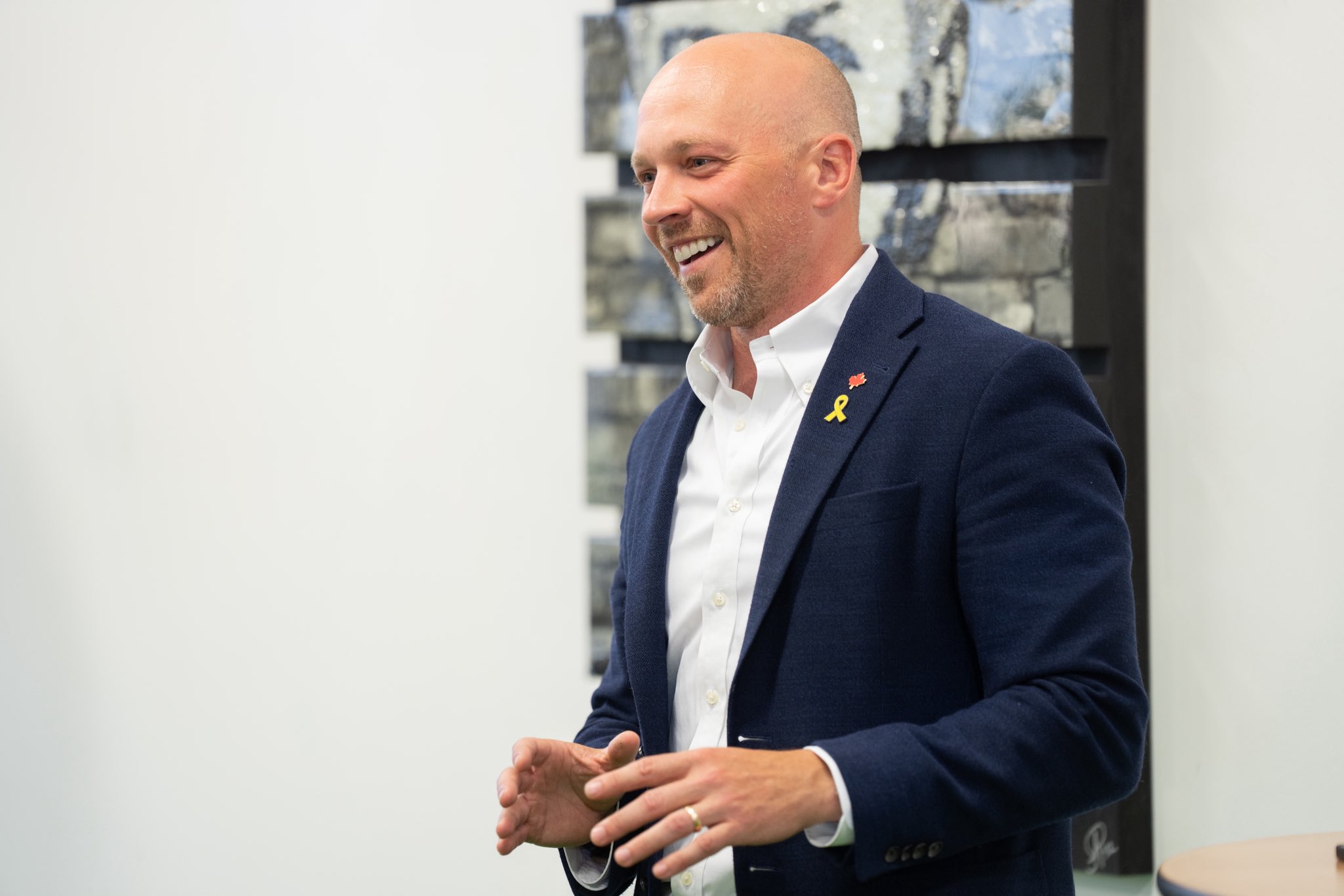
Bradford speaking to supporters.

Last year, my family got a new car, and every morning, the kids would wake up, run down the stairs, look out the front window and check to see if it was still there.
Probably not uncommon for families in Toronto these days, given the high rate of car theft in our city but definitely not normal.
Still, I would laugh it off. Until the morning we woke up and our car was gone.
No one was harmed. Nothing irreplaceable was in the car. But something shifted.
My daughter slept with us for weeks after and we still wonder — will it happen again?
We all have versions of this story where the Toronto we live in today feels different from the Toronto we used to love.
I want a safer city.
I want a city where the subway runs better for my commute to drop the kids at school and go to work.
I want a city that my kids still want to live in when they grow up and leave home.
That’s not Liberal or Conservative. It’s just human.
And that’s what I tell people when they ask me why I’m supporting Brad Bradford in this year’s mayoral campaign.
This is the beauty of municipal politics.
We have all fought and worked hard to protect a system that is (mostly) operating outside the siloes of partisan politics.
Instead of looking at which political “card” we carry, we get to really look at our city and think about what we want and need most in the communities where we live.
And overwhelmingly, many of us are coming to the conclusion that what we need — is change.
Brad Bradford has laid out that vision plainly.
For example, he wants to take back the corner of Yonge and Dundas — the square most of us have quietly stopped walking through. A permanent police substation for a steady safety presence. Expanded mental health and housing outreach for the people in crisis there. A year-round programming calendar, with the big digital screens carrying rotating tributes to Canadians like Terry Fox and Viola Desmond instead of wall-to-wall advertising. And he says the brands that profit from that corner should pay to restore it, not us.
And he has committed to hiring 1,000 net new front-line officers in his first term — on patrol, in your neighbourhood, at your subway station. Not administrators, and not another layer of management.
We’ve also all watched him get smart things done already, working together with city councillors from all parts of the city to question and upend the status quo where it made sense to do it.
When the Gardiner rehabilitation turned a manageable commute into a two-hour ordeal, he was the one who pushed council to stop accepting the timeline it had been handed. His motion directed staff to evaluate round-the-clock construction, including Sundays, and to make more use of prefabricated components built off-site. Council backed him, and the schedule was eventually accelerated by roughly a year.
And when parents in his own ward found needles in a park beside a daycare, he brought a motion to council to have encampments near schools, playgrounds and daycares cleared quickly. It was debated, amended and passed, and within two months city staff had cleared nearly all of the encampments closest to those places.
We don’t have to accept that the only progressive vision for Toronto is one where the city continues to erode because Mayor Chow won’t make hard choices.
We can locate bike lanes in places that make sense for cyclists and cars.
We can support people who are living with addiction and mental health issues by providing treatment and housing.
We can feel safer in our homes by making sure our police have the staffing they need to cover the city.
We can get more time back in our lives by making smarter choices around construction planning and road closures, especially on weekends and holidays.
And yes, it is possible to do these things without downloading all of it onto our property tax bills at a time when life is already really expensive.
Long before I got involved in politics, my high school civics teacher taught my Grade 11 class how to read a policy platform and think about how the commitments connected to our lives.
What do we need? What do we want? What can we afford?
Toronto’s mayoral race allows us to suspend partisan politics and do exactly that.
Don’t miss the opportunity.
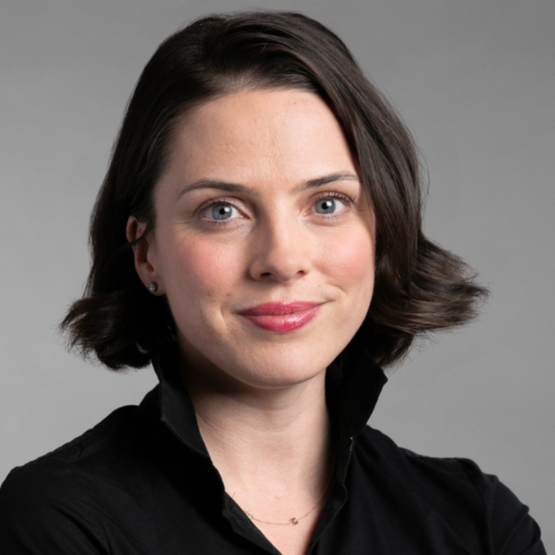
Genevieve Tomney is co-chair of Brad Bradford’s run for Toronto mayor. She previously served as a senior adviser to former premier Kathleen Wynne and as co-campaign director for former Liberal leader Bonnie Crombie.
Last year, my family got a new car, and every morning, the kids would wake up, run down the stairs, look out the front window and check to see if it was still there.
Probably not uncommon for families in Toronto these days, given the high rate of car theft in our city but definitely not normal.
Still, I would laugh it off. Until the morning we woke up and our car was gone.
No one was harmed. Nothing irreplaceable was in the car. But something shifted.
My daughter slept with us for weeks after and we still wonder — will it happen again?
We all have versions of this story where the Toronto we live in today feels different from the Toronto we used to love.
I want a safer city.
I want a city where the subway runs better for my commute to drop the kids at school and go to work.
I want a city that my kids still want to live in when they grow up and leave home.
That’s not Liberal or Conservative. It’s just human.
And that’s what I tell people when they ask me why I’m supporting Brad Bradford in this year’s mayoral campaign.
This is the beauty of municipal politics.
We have all fought and worked hard to protect a system that is (mostly) operating outside the siloes of partisan politics.
Instead of looking at which political “card” we carry, we get to really look at our city and think about what we want and need most in the communities where we live.
And overwhelmingly, many of us are coming to the conclusion that what we need — is change.
Brad Bradford has laid out that vision plainly.
For example, he wants to take back the corner of Yonge and Dundas — the square most of us have quietly stopped walking through. A permanent police substation for a steady safety presence. Expanded mental health and housing outreach for the people in crisis there. A year-round programming calendar, with the big digital screens carrying rotating tributes to Canadians like Terry Fox and Viola Desmond instead of wall-to-wall advertising. And he says the brands that profit from that corner should pay to restore it, not us.
And he has committed to hiring 1,000 net new front-line officers in his first term — on patrol, in your neighbourhood, at your subway station. Not administrators, and not another layer of management.
We’ve also all watched him get smart things done already, working together with city councillors from all parts of the city to question and upend the status quo where it made sense to do it.
When the Gardiner rehabilitation turned a manageable commute into a two-hour ordeal, he was the one who pushed council to stop accepting the timeline it had been handed. His motion directed staff to evaluate round-the-clock construction, including Sundays, and to make more use of prefabricated components built off-site. Council backed him, and the schedule was eventually accelerated by roughly a year.
And when parents in his own ward found needles in a park beside a daycare, he brought a motion to council to have encampments near schools, playgrounds and daycares cleared quickly. It was debated, amended and passed, and within two months city staff had cleared nearly all of the encampments closest to those places.
We don’t have to accept that the only progressive vision for Toronto is one where the city continues to erode because Mayor Chow won’t make hard choices.
We can locate bike lanes in places that make sense for cyclists and cars.
We can support people who are living with addiction and mental health issues by providing treatment and housing.
We can feel safer in our homes by making sure our police have the staffing they need to cover the city.
We can get more time back in our lives by making smarter choices around construction planning and road closures, especially on weekends and holidays.
And yes, it is possible to do these things without downloading all of it onto our property tax bills at a time when life is already really expensive.
Long before I got involved in politics, my high school civics teacher taught my Grade 11 class how to read a policy platform and think about how the commitments connected to our lives.
What do we need? What do we want? What can we afford?
Toronto’s mayoral race allows us to suspend partisan politics and do exactly that.
Don’t miss the opportunity.
Genevieve Tomney is co-chair of Brad Bradford’s run for Toronto mayor. She previously served as a senior adviser to former premier Kathleen Wynne and as co-campaign director for former Liberal leader Bonnie Crombie.
Last year, my family got a new car, and every morning, the kids would wake up, run down the stairs, look out the front window and check to see if it was still there.
Probably not uncommon for families in Toronto these days, given the high rate of car theft in our city but definitely not normal.
Still, I would laugh it off. Until the morning we woke up and our car was gone.
No one was harmed. Nothing irreplaceable was in the car. But something shifted.
My daughter slept with us for weeks after and we still wonder — will it happen again?
We all have versions of this story where the Toronto we live in today feels different from the Toronto we used to love.
I want a safer city.
I want a city where the subway runs better for my commute to drop the kids at school and go to work.
I want a city that my kids still want to live in when they grow up and leave home.
That’s not Liberal or Conservative. It’s just human.
And that’s what I tell people when they ask me why I’m supporting Brad Bradford in this year’s mayoral campaign.
This is the beauty of municipal politics.
We have all fought and worked hard to protect a system that is (mostly) operating outside the siloes of partisan politics.
Instead of looking at which political “card” we carry, we get to really look at our city and think about what we want and need most in the communities where we live.
And overwhelmingly, many of us are coming to the conclusion that what we need — is change.
Brad Bradford has laid out that vision plainly.
For example, he wants to take back the corner of Yonge and Dundas — the square most of us have quietly stopped walking through. A permanent police substation for a steady safety presence. Expanded mental health and housing outreach for the people in crisis there. A year-round programming calendar, with the big digital screens carrying rotating tributes to Canadians like Terry Fox and Viola Desmond instead of wall-to-wall advertising. And he says the brands that profit from that corner should pay to restore it, not us.
And he has committed to hiring 1,000 net new front-line officers in his first term — on patrol, in your neighbourhood, at your subway station. Not administrators, and not another layer of management.
We’ve also all watched him get smart things done already, working together with city councillors from all parts of the city to question and upend the status quo where it made sense to do it.
When the Gardiner rehabilitation turned a manageable commute into a two-hour ordeal, he was the one who pushed council to stop accepting the timeline it had been handed. His motion directed staff to evaluate round-the-clock construction, including Sundays, and to make more use of prefabricated components built off-site. Council backed him, and the schedule was eventually accelerated by roughly a year.
And when parents in his own ward found needles in a park beside a daycare, he brought a motion to council to have encampments near schools, playgrounds and daycares cleared quickly. It was debated, amended and passed, and within two months city staff had cleared nearly all of the encampments closest to those places.
We don’t have to accept that the only progressive vision for Toronto is one where the city continues to erode because Mayor Chow won’t make hard choices.
We can locate bike lanes in places that make sense for cyclists and cars.
We can support people who are living with addiction and mental health issues by providing treatment and housing.
We can feel safer in our homes by making sure our police have the staffing they need to cover the city.
We can get more time back in our lives by making smarter choices around construction planning and road closures, especially on weekends and holidays.
And yes, it is possible to do these things without downloading all of it onto our property tax bills at a time when life is already really expensive.
Long before I got involved in politics, my high school civics teacher taught my Grade 11 class how to read a policy platform and think about how the commitments connected to our lives.
What do we need? What do we want? What can we afford?
Toronto’s mayoral race allows us to suspend partisan politics and do exactly that.
Don’t miss the opportunity.
Genevieve Tomney is co-chair of Brad Bradford’s run for Toronto mayor. She previously served as a senior adviser to former premier Kathleen Wynne and as co-campaign director for former Liberal leader Bonnie Crombie.
Last year, my family got a new car, and every morning, the kids would wake up, run down the stairs, look out the front window and check to see if it was still there.
Probably not uncommon for families in Toronto these days, given the high rate of car theft in our city but definitely not normal.
Still, I would laugh it off. Until the morning we woke up and our car was gone.
No one was harmed. Nothing irreplaceable was in the car. But something shifted.
My daughter slept with us for weeks after and we still wonder — will it happen again?
We all have versions of this story where the Toronto we live in today feels different from the Toronto we used to love.
I want a safer city.
I want a city where the subway runs better for my commute to drop the kids at school and go to work.
I want a city that my kids still want to live in when they grow up and leave home.
That’s not Liberal or Conservative. It’s just human.
And that’s what I tell people when they ask me why I’m supporting Brad Bradford in this year’s mayoral campaign.
This is the beauty of municipal politics.
We have all fought and worked hard to protect a system that is (mostly) operating outside the siloes of partisan politics.
Instead of looking at which political “card” we carry, we get to really look at our city and think about what we want and need most in the communities where we live.
And overwhelmingly, many of us are coming to the conclusion that what we need — is change.
Brad Bradford has laid out that vision plainly.
For example, he wants to take back the corner of Yonge and Dundas — the square most of us have quietly stopped walking through. A permanent police substation for a steady safety presence. Expanded mental health and housing outreach for the people in crisis there. A year-round programming calendar, with the big digital screens carrying rotating tributes to Canadians like Terry Fox and Viola Desmond instead of wall-to-wall advertising. And he says the brands that profit from that corner should pay to restore it, not us.
And he has committed to hiring 1,000 net new front-line officers in his first term — on patrol, in your neighbourhood, at your subway station. Not administrators, and not another layer of management.
We’ve also all watched him get smart things done already, working together with city councillors from all parts of the city to question and upend the status quo where it made sense to do it.
When the Gardiner rehabilitation turned a manageable commute into a two-hour ordeal, he was the one who pushed council to stop accepting the timeline it had been handed. His motion directed staff to evaluate round-the-clock construction, including Sundays, and to make more use of prefabricated components built off-site. Council backed him, and the schedule was eventually accelerated by roughly a year.
And when parents in his own ward found needles in a park beside a daycare, he brought a motion to council to have encampments near schools, playgrounds and daycares cleared quickly. It was debated, amended and passed, and within two months city staff had cleared nearly all of the encampments closest to those places.
We don’t have to accept that the only progressive vision for Toronto is one where the city continues to erode because Mayor Chow won’t make hard choices.
We can locate bike lanes in places that make sense for cyclists and cars.
We can support people who are living with addiction and mental health issues by providing treatment and housing.
We can feel safer in our homes by making sure our police have the staffing they need to cover the city.
We can get more time back in our lives by making smarter choices around construction planning and road closures, especially on weekends and holidays.
And yes, it is possible to do these things without downloading all of it onto our property tax bills at a time when life is already really expensive.
Long before I got involved in politics, my high school civics teacher taught my Grade 11 class how to read a policy platform and think about how the commitments connected to our lives.
What do we need? What do we want? What can we afford?
Toronto’s mayoral race allows us to suspend partisan politics and do exactly that.
Don’t miss the opportunity.
Genevieve Tomney is co-chair of Brad Bradford’s run for Toronto mayor. She previously served as a senior adviser to former premier Kathleen Wynne and as co-campaign director for former Liberal leader Bonnie Crombie.
Last year, my family got a new car, and every morning, the kids would wake up, run down the stairs, look out the front window and check to see if it was still there.
Probably not uncommon for families in Toronto these days, given the high rate of car theft in our city but definitely not normal.
Still, I would laugh it off. Until the morning we woke up and our car was gone.
No one was harmed. Nothing irreplaceable was in the car. But something shifted.
My daughter slept with us for weeks after and we still wonder — will it happen again?
We all have versions of this story where the Toronto we live in today feels different from the Toronto we used to love.
I want a safer city.
I want a city where the subway runs better for my commute to drop the kids at school and go to work.
I want a city that my kids still want to live in when they grow up and leave home.
That’s not Liberal or Conservative. It’s just human.
And that’s what I tell people when they ask me why I’m supporting Brad Bradford in this year’s mayoral campaign.
This is the beauty of municipal politics.
We have all fought and worked hard to protect a system that is (mostly) operating outside the siloes of partisan politics.
Instead of looking at which political “card” we carry, we get to really look at our city and think about what we want and need most in the communities where we live.
And overwhelmingly, many of us are coming to the conclusion that what we need — is change.
Brad Bradford has laid out that vision plainly.
For example, he wants to take back the corner of Yonge and Dundas — the square most of us have quietly stopped walking through. A permanent police substation for a steady safety presence. Expanded mental health and housing outreach for the people in crisis there. A year-round programming calendar, with the big digital screens carrying rotating tributes to Canadians like Terry Fox and Viola Desmond instead of wall-to-wall advertising. And he says the brands that profit from that corner should pay to restore it, not us.
And he has committed to hiring 1,000 net new front-line officers in his first term — on patrol, in your neighbourhood, at your subway station. Not administrators, and not another layer of management.
We’ve also all watched him get smart things done already, working together with city councillors from all parts of the city to question and upend the status quo where it made sense to do it.
When the Gardiner rehabilitation turned a manageable commute into a two-hour ordeal, he was the one who pushed council to stop accepting the timeline it had been handed. His motion directed staff to evaluate round-the-clock construction, including Sundays, and to make more use of prefabricated components built off-site. Council backed him, and the schedule was eventually accelerated by roughly a year.
And when parents in his own ward found needles in a park beside a daycare, he brought a motion to council to have encampments near schools, playgrounds and daycares cleared quickly. It was debated, amended and passed, and within two months city staff had cleared nearly all of the encampments closest to those places.
We don’t have to accept that the only progressive vision for Toronto is one where the city continues to erode because Mayor Chow won’t make hard choices.
We can locate bike lanes in places that make sense for cyclists and cars.
We can support people who are living with addiction and mental health issues by providing treatment and housing.
We can feel safer in our homes by making sure our police have the staffing they need to cover the city.
We can get more time back in our lives by making smarter choices around construction planning and road closures, especially on weekends and holidays.
And yes, it is possible to do these things without downloading all of it onto our property tax bills at a time when life is already really expensive.
Long before I got involved in politics, my high school civics teacher taught my Grade 11 class how to read a policy platform and think about how the commitments connected to our lives.
What do we need? What do we want? What can we afford?
Toronto’s mayoral race allows us to suspend partisan politics and do exactly that.
Don’t miss the opportunity.
Genevieve Tomney is co-chair of Brad Bradford’s run for Toronto mayor. She previously served as a senior adviser to former premier Kathleen Wynne and as co-campaign director for former Liberal leader Bonnie Crombie.
Last year, my family got a new car, and every morning, the kids would wake up, run down the stairs, look out the front window and check to see if it was still there.
Probably not uncommon for families in Toronto these days, given the high rate of car theft in our city but definitely not normal.
Still, I would laugh it off. Until the morning we woke up and our car was gone.
No one was harmed. Nothing irreplaceable was in the car. But something shifted.
My daughter slept with us for weeks after and we still wonder — will it happen again?
We all have versions of this story where the Toronto we live in today feels different from the Toronto we used to love.
I want a safer city.
I want a city where the subway runs better for my commute to drop the kids at school and go to work.
I want a city that my kids still want to live in when they grow up and leave home.
That’s not Liberal or Conservative. It’s just human.
And that’s what I tell people when they ask me why I’m supporting Brad Bradford in this year’s mayoral campaign.
This is the beauty of municipal politics.
We have all fought and worked hard to protect a system that is (mostly) operating outside the siloes of partisan politics.
Instead of looking at which political “card” we carry, we get to really look at our city and think about what we want and need most in the communities where we live.
And overwhelmingly, many of us are coming to the conclusion that what we need — is change.
Brad Bradford has laid out that vision plainly.
For example, he wants to take back the corner of Yonge and Dundas — the square most of us have quietly stopped walking through. A permanent police substation for a steady safety presence. Expanded mental health and housing outreach for the people in crisis there. A year-round programming calendar, with the big digital screens carrying rotating tributes to Canadians like Terry Fox and Viola Desmond instead of wall-to-wall advertising. And he says the brands that profit from that corner should pay to restore it, not us.
And he has committed to hiring 1,000 net new front-line officers in his first term — on patrol, in your neighbourhood, at your subway station. Not administrators, and not another layer of management.
We’ve also all watched him get smart things done already, working together with city councillors from all parts of the city to question and upend the status quo where it made sense to do it.
When the Gardiner rehabilitation turned a manageable commute into a two-hour ordeal, he was the one who pushed council to stop accepting the timeline it had been handed. His motion directed staff to evaluate round-the-clock construction, including Sundays, and to make more use of prefabricated components built off-site. Council backed him, and the schedule was eventually accelerated by roughly a year.
And when parents in his own ward found needles in a park beside a daycare, he brought a motion to council to have encampments near schools, playgrounds and daycares cleared quickly. It was debated, amended and passed, and within two months city staff had cleared nearly all of the encampments closest to those places.
We don’t have to accept that the only progressive vision for Toronto is one where the city continues to erode because Mayor Chow won’t make hard choices.
We can locate bike lanes in places that make sense for cyclists and cars.
We can support people who are living with addiction and mental health issues by providing treatment and housing.
We can feel safer in our homes by making sure our police have the staffing they need to cover the city.
We can get more time back in our lives by making smarter choices around construction planning and road closures, especially on weekends and holidays.
And yes, it is possible to do these things without downloading all of it onto our property tax bills at a time when life is already really expensive.
Long before I got involved in politics, my high school civics teacher taught my Grade 11 class how to read a policy platform and think about how the commitments connected to our lives.
What do we need? What do we want? What can we afford?
Toronto’s mayoral race allows us to suspend partisan politics and do exactly that.
Don’t miss the opportunity.
Genevieve Tomney is co-chair of Brad Bradford’s run for Toronto mayor. She previously served as a senior adviser to former premier Kathleen Wynne and as co-campaign director for former Liberal leader Bonnie Crombie.
Last year, my family got a new car, and every morning, the kids would wake up, run down the stairs, look out the front window and check to see if it was still there.
Probably not uncommon for families in Toronto these days, given the high rate of car theft in our city but definitely not normal.
Still, I would laugh it off. Until the morning we woke up and our car was gone.
No one was harmed. Nothing irreplaceable was in the car. But something shifted.
My daughter slept with us for weeks after and we still wonder — will it happen again?
We all have versions of this story where the Toronto we live in today feels different from the Toronto we used to love.
I want a safer city.
I want a city where the subway runs better for my commute to drop the kids at school and go to work.
I want a city that my kids still want to live in when they grow up and leave home.
That’s not Liberal or Conservative. It’s just human.
And that’s what I tell people when they ask me why I’m supporting Brad Bradford in this year’s mayoral campaign.
This is the beauty of municipal politics.
We have all fought and worked hard to protect a system that is (mostly) operating outside the siloes of partisan politics.
Instead of looking at which political “card” we carry, we get to really look at our city and think about what we want and need most in the communities where we live.
And overwhelmingly, many of us are coming to the conclusion that what we need — is change.
Brad Bradford has laid out that vision plainly.
For example, he wants to take back the corner of Yonge and Dundas — the square most of us have quietly stopped walking through. A permanent police substation for a steady safety presence. Expanded mental health and housing outreach for the people in crisis there. A year-round programming calendar, with the big digital screens carrying rotating tributes to Canadians like Terry Fox and Viola Desmond instead of wall-to-wall advertising. And he says the brands that profit from that corner should pay to restore it, not us.
And he has committed to hiring 1,000 net new front-line officers in his first term — on patrol, in your neighbourhood, at your subway station. Not administrators, and not another layer of management.
We’ve also all watched him get smart things done already, working together with city councillors from all parts of the city to question and upend the status quo where it made sense to do it.
When the Gardiner rehabilitation turned a manageable commute into a two-hour ordeal, he was the one who pushed council to stop accepting the timeline it had been handed. His motion directed staff to evaluate round-the-clock construction, including Sundays, and to make more use of prefabricated components built off-site. Council backed him, and the schedule was eventually accelerated by roughly a year.
And when parents in his own ward found needles in a park beside a daycare, he brought a motion to council to have encampments near schools, playgrounds and daycares cleared quickly. It was debated, amended and passed, and within two months city staff had cleared nearly all of the encampments closest to those places.
We don’t have to accept that the only progressive vision for Toronto is one where the city continues to erode because Mayor Chow won’t make hard choices.
We can locate bike lanes in places that make sense for cyclists and cars.
We can support people who are living with addiction and mental health issues by providing treatment and housing.
We can feel safer in our homes by making sure our police have the staffing they need to cover the city.
We can get more time back in our lives by making smarter choices around construction planning and road closures, especially on weekends and holidays.
And yes, it is possible to do these things without downloading all of it onto our property tax bills at a time when life is already really expensive.
Long before I got involved in politics, my high school civics teacher taught my Grade 11 class how to read a policy platform and think about how the commitments connected to our lives.
What do we need? What do we want? What can we afford?
Toronto’s mayoral race allows us to suspend partisan politics and do exactly that.
Don’t miss the opportunity.
Genevieve Tomney is co-chair of Brad Bradford’s run for Toronto mayor. She previously served as a senior adviser to former premier Kathleen Wynne and as co-campaign director for former Liberal leader Bonnie Crombie.
Last year, my family got a new car, and every morning, the kids would wake up, run down the stairs, look out the front window and check to see if it was still there.
Probably not uncommon for families in Toronto these days, given the high rate of car theft in our city but definitely not normal.
Still, I would laugh it off. Until the morning we woke up and our car was gone.
No one was harmed. Nothing irreplaceable was in the car. But something shifted.
My daughter slept with us for weeks after and we still wonder — will it happen again?
We all have versions of this story where the Toronto we live in today feels different from the Toronto we used to love.
I want a safer city.
I want a city where the subway runs better for my commute to drop the kids at school and go to work.
I want a city that my kids still want to live in when they grow up and leave home.
That’s not Liberal or Conservative. It’s just human.
And that’s what I tell people when they ask me why I’m supporting Brad Bradford in this year’s mayoral campaign.
This is the beauty of municipal politics.
We have all fought and worked hard to protect a system that is (mostly) operating outside the siloes of partisan politics.
Instead of looking at which political “card” we carry, we get to really look at our city and think about what we want and need most in the communities where we live.
And overwhelmingly, many of us are coming to the conclusion that what we need — is change.
Brad Bradford has laid out that vision plainly.
For example, he wants to take back the corner of Yonge and Dundas — the square most of us have quietly stopped walking through. A permanent police substation for a steady safety presence. Expanded mental health and housing outreach for the people in crisis there. A year-round programming calendar, with the big digital screens carrying rotating tributes to Canadians like Terry Fox and Viola Desmond instead of wall-to-wall advertising. And he says the brands that profit from that corner should pay to restore it, not us.
And he has committed to hiring 1,000 net new front-line officers in his first term — on patrol, in your neighbourhood, at your subway station. Not administrators, and not another layer of management.
We’ve also all watched him get smart things done already, working together with city councillors from all parts of the city to question and upend the status quo where it made sense to do it.
When the Gardiner rehabilitation turned a manageable commute into a two-hour ordeal, he was the one who pushed council to stop accepting the timeline it had been handed. His motion directed staff to evaluate round-the-clock construction, including Sundays, and to make more use of prefabricated components built off-site. Council backed him, and the schedule was eventually accelerated by roughly a year.
And when parents in his own ward found needles in a park beside a daycare, he brought a motion to council to have encampments near schools, playgrounds and daycares cleared quickly. It was debated, amended and passed, and within two months city staff had cleared nearly all of the encampments closest to those places.
We don’t have to accept that the only progressive vision for Toronto is one where the city continues to erode because Mayor Chow won’t make hard choices.
We can locate bike lanes in places that make sense for cyclists and cars.
We can support people who are living with addiction and mental health issues by providing treatment and housing.
We can feel safer in our homes by making sure our police have the staffing they need to cover the city.
We can get more time back in our lives by making smarter choices around construction planning and road closures, especially on weekends and holidays.
And yes, it is possible to do these things without downloading all of it onto our property tax bills at a time when life is already really expensive.
Long before I got involved in politics, my high school civics teacher taught my Grade 11 class how to read a policy platform and think about how the commitments connected to our lives.
What do we need? What do we want? What can we afford?
Toronto’s mayoral race allows us to suspend partisan politics and do exactly that.
Don’t miss the opportunity.
Genevieve Tomney is co-chair of Brad Bradford’s run for Toronto mayor. She previously served as a senior adviser to former premier Kathleen Wynne and as co-campaign director for former Liberal leader Bonnie Crombie.
Last year, my family got a new car, and every morning, the kids would wake up, run down the stairs, look out the front window and check to see if it was still there.
Probably not uncommon for families in Toronto these days, given the high rate of car theft in our city but definitely not normal.
Still, I would laugh it off. Until the morning we woke up and our car was gone.
No one was harmed. Nothing irreplaceable was in the car. But something shifted.
My daughter slept with us for weeks after and we still wonder — will it happen again?
We all have versions of this story where the Toronto we live in today feels different from the Toronto we used to love.
I want a safer city.
I want a city where the subway runs better for my commute to drop the kids at school and go to work.
I want a city that my kids still want to live in when they grow up and leave home.
That’s not Liberal or Conservative. It’s just human.
And that’s what I tell people when they ask me why I’m supporting Brad Bradford in this year’s mayoral campaign.
This is the beauty of municipal politics.
We have all fought and worked hard to protect a system that is (mostly) operating outside the siloes of partisan politics.
Instead of looking at which political “card” we carry, we get to really look at our city and think about what we want and need most in the communities where we live.
And overwhelmingly, many of us are coming to the conclusion that what we need — is change.
Brad Bradford has laid out that vision plainly.
For example, he wants to take back the corner of Yonge and Dundas — the square most of us have quietly stopped walking through. A permanent police substation for a steady safety presence. Expanded mental health and housing outreach for the people in crisis there. A year-round programming calendar, with the big digital screens carrying rotating tributes to Canadians like Terry Fox and Viola Desmond instead of wall-to-wall advertising. And he says the brands that profit from that corner should pay to restore it, not us.
And he has committed to hiring 1,000 net new front-line officers in his first term — on patrol, in your neighbourhood, at your subway station. Not administrators, and not another layer of management.
We’ve also all watched him get smart things done already, working together with city councillors from all parts of the city to question and upend the status quo where it made sense to do it.
When the Gardiner rehabilitation turned a manageable commute into a two-hour ordeal, he was the one who pushed council to stop accepting the timeline it had been handed. His motion directed staff to evaluate round-the-clock construction, including Sundays, and to make more use of prefabricated components built off-site. Council backed him, and the schedule was eventually accelerated by roughly a year.
And when parents in his own ward found needles in a park beside a daycare, he brought a motion to council to have encampments near schools, playgrounds and daycares cleared quickly. It was debated, amended and passed, and within two months city staff had cleared nearly all of the encampments closest to those places.
We don’t have to accept that the only progressive vision for Toronto is one where the city continues to erode because Mayor Chow won’t make hard choices.
We can locate bike lanes in places that make sense for cyclists and cars.
We can support people who are living with addiction and mental health issues by providing treatment and housing.
We can feel safer in our homes by making sure our police have the staffing they need to cover the city.
We can get more time back in our lives by making smarter choices around construction planning and road closures, especially on weekends and holidays.
And yes, it is possible to do these things without downloading all of it onto our property tax bills at a time when life is already really expensive.
Long before I got involved in politics, my high school civics teacher taught my Grade 11 class how to read a policy platform and think about how the commitments connected to our lives.
What do we need? What do we want? What can we afford?
Toronto’s mayoral race allows us to suspend partisan politics and do exactly that.
Don’t miss the opportunity.
Genevieve Tomney is co-chair of Brad Bradford’s run for Toronto mayor. She previously served as a senior adviser to former premier Kathleen Wynne and as co-campaign director for former Liberal leader Bonnie Crombie.