
Breaking

The big red mess

Here's how the nomination contest in Scarborough has torn Liberal land apart.
Ahmad Elbayoumi
May 15, 2026

THE LEDE

🎧 Missed this? On this week's episode of The Insiders, Erin Morrison, Sharan Kaur, Mitch Heimpel and I talk Scarborough Southwest. Plus: did Marit Stiles go too far when she suggested Doug Ford could end up in prison? Listen here.

We’re back Monday, May 25 on your favourite podcast app.

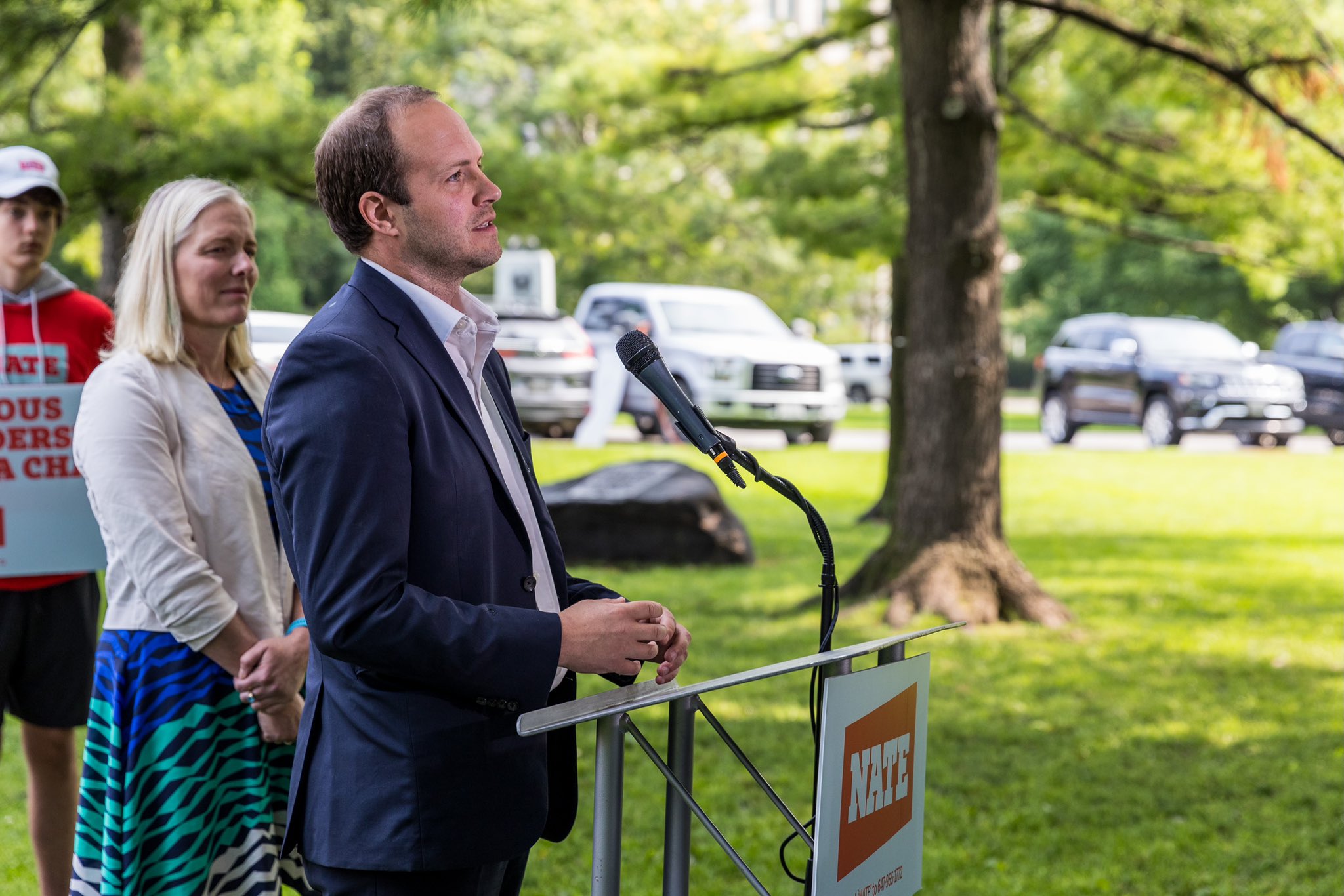
“It’s all about f-cking egos:” Nate Erskine-Smith’s claim of “serious irregularities” in Saturday’s four-way nomination contest in Scarborough has detonated an all-out civil war in Liberal land.

Erskine-Smith says he’s prepared to step aside in Scarborough Southwest if the Liberals agree to investigate and act.

Saturday’s result was far from the rout some had predicted for Erskine-Smith. By around 4 p.m., Ahsanul Hafiz’s campaign believed it had enough support — around 60 per cent — to clinch the nomination on the first ballot. Qadira Jackson’s campaign projected Hafiz ahead of Erskine-Smith, 55 per cent to 17 per cent.

“If we can’t close this out on the first ballot, a lot of people will have lied to us,” a source on Hafiz’s campaign said.

Erskine-Smith’s team, buoyed by a late endorsement from Prime Minister Mark Carney, was cautious. For much of the week before the contest, his campaign had signalled concerns over some 1,200 rejected memberships. By Saturday, the team wasn’t expecting a first-ballot win — one operative dismissed their rivals’ math as “bullshit” — but believed they still had a path.

In the end: Erskine-Smith led by nine votes on the first ballot, but couldn’t eke out a win on the second, losing by 19 votes to the Domino’s Pizza restaurateur — who had a second-ballot deal with Jackson. 

Erskine-Smith, who met with his team Monday, is now challenging that result. An hour-long call with roughly two dozen campaign team members — where participants traded stories about what they witnessed during voting — ended with clear agreement that an appeal was “imperative.”

THE LEDE

🎧 Missed this? On this week's episode of The Insiders, Erin Morrison, Sharan Kaur, Mitch Heimpel and I talk Scarborough Southwest. Plus: did Marit Stiles go too far when she suggested Doug Ford could end up in prison? Listen here.

We’re back Monday, May 25 on your favourite podcast app.

“It’s all about f-cking egos:” Nate Erskine-Smith’s claim of “serious irregularities” in Saturday’s four-way nomination contest in Scarborough has detonated an all-out civil war in Liberal land.

Erskine-Smith says he’s prepared to step aside in Scarborough Southwest if the Liberals agree to investigate and act.

Saturday’s result was far from the rout some had predicted for Erskine-Smith. By around 4 p.m., Ahsanul Hafiz’s campaign believed it had enough support — around 60 per cent — to clinch the nomination on the first ballot. Qadira Jackson’s campaign projected Hafiz ahead of Erskine-Smith, 55 per cent to 17 per cent.

“If we can’t close this out on the first ballot, a lot of people will have lied to us,” a source on Hafiz’s campaign said.

Erskine-Smith’s team, buoyed by a late endorsement from Prime Minister Mark Carney, was cautious. For much of the week before the contest, his campaign had signalled concerns over some 1,200 rejected memberships. By Saturday, the team wasn’t expecting a first-ballot win — one operative dismissed their rivals’ math as “bullshit” — but believed they still had a path.

In the end: Erskine-Smith led by nine votes on the first ballot, but couldn’t eke out a win on the second, losing by 19 votes to the Domino’s Pizza restaurateur — who had a second-ballot deal with Jackson. 

Erskine-Smith, who met with his team Monday, is now challenging that result. An hour-long call with roughly two dozen campaign team members — where participants traded stories about what they witnessed during voting — ended with clear agreement that an appeal was “imperative.”

THE LEDE

🎧 Missed this? On this week's episode of The Insiders, Erin Morrison, Sharan Kaur, Mitch Heimpel and I talk Scarborough Southwest. Plus: did Marit Stiles go too far when she suggested Doug Ford could end up in prison? Listen here.

We’re back Monday, May 25 on your favourite podcast app.

“It’s all about f-cking egos:” Nate Erskine-Smith’s claim of “serious irregularities” in Saturday’s four-way nomination contest in Scarborough has detonated an all-out civil war in Liberal land.

Erskine-Smith says he’s prepared to step aside in Scarborough Southwest if the Liberals agree to investigate and act.

Saturday’s result was far from the rout some had predicted for Erskine-Smith. By around 4 p.m., Ahsanul Hafiz’s campaign believed it had enough support — around 60 per cent — to clinch the nomination on the first ballot. Qadira Jackson’s campaign projected Hafiz ahead of Erskine-Smith, 55 per cent to 17 per cent.

“If we can’t close this out on the first ballot, a lot of people will have lied to us,” a source on Hafiz’s campaign said.

Erskine-Smith’s team, buoyed by a late endorsement from Prime Minister Mark Carney, was cautious. For much of the week before the contest, his campaign had signalled concerns over some 1,200 rejected memberships. By Saturday, the team wasn’t expecting a first-ballot win — one operative dismissed their rivals’ math as “bullshit” — but believed they still had a path.

In the end: Erskine-Smith led by nine votes on the first ballot, but couldn’t eke out a win on the second, losing by 19 votes to the Domino’s Pizza restaurateur — who had a second-ballot deal with Jackson. 

Erskine-Smith, who met with his team Monday, is now challenging that result. An hour-long call with roughly two dozen campaign team members — where participants traded stories about what they witnessed during voting — ended with clear agreement that an appeal was “imperative.”

Here’s why: In their three-page notice of appeal, Erskine-Smith’s campaign claimed the ballot boxes contained 34 more votes than there were recorded voters. “There is no reasonable explanation for these unaccounted-for ballots, and it is inexcusable in a contest decided by 19 votes,” it said. “If the same error rate occurred in a federal election, it would mean over 400,000 unaccounted-for ballots.”

Scrutineers reported a series of alleged irregularities during the vote, including people casting ballots and then returning to credential lines, individuals entering the voting area through the exit, and some without credentials remaining in — or repeatedly returning to — the voting area throughout the day. 

One ballot balance sheet went missing altogether, the campaign alleged, while at least one person was documented as receiving a ballot after already being recorded as having voted — evidence, the campaign argued, that the party bungled the “most basic task” of ballot-tracking.

“I’ve seen an election in Bangladesh that wasn’t this badly organized,” one Erskine-Smith scrutineer, who spoke on condition of anonymity, said in an interview. The scrutineer described mounting disorder inside the voting room late into the day.

“It got worse in the last couple of hours — maybe the last 90 minutes,” they said. “People were walking through the exit. A large number of people, including people wearing merchandise from other campaigns, were walking through the voting area.”

“The problem is that once you have large volumes of people, as soon as you start to lose control, it’s very hard to restore it — and they really struggled on the day… There were just too many people and not enough people to try to manage it.”

Second: The appeal alleged Saturday’s contest was plagued by inconsistencies in how voters were ID’d, claiming documents not included on the party’s pre-approved list of acceptable identification were cleared throughout the day. Among the documents allegedly waved through in some cases: signed and unsigned leases, digital report cards, Amazon orders and other “non-standard” forms of proof of residency.

“Dozens and dozens of asylum seekers voted with their refugee claimant documents,” wrote Andreas Katsouris, Erskine-Smith’s chief scrutineer. “Others were able to prove their addresses using just an apartment lease, sometimes unsigned and two of which improbably listed voters under 18.” Despite repeated requests, Katsouris was not made available for an interview.

But a second individual, who also spoke on condition of anonymity, said the practice wasn’t ad hoc — it was ruled about an hour into voting that refugee documents would be accepted, so long as voters could also provide proof of address.

Third: The campaign claimed voters were, in many cases, being coached on how to cast their ballots from inside the voting booths, including over video calls — conduct Katsouris said would amount to “clear evidence of vote buying” in other jurisdictions.

“What so many of us saw throughout the day was deeply alarming,” a second Erskine-Smith scrutineer said. “We didn’t sit on our hands. We reported it, and mostly got shrugs or a ‘these things happen’ response.”

But not everyone in the room agreed with that assessment. “What I saw was that Nate’s people were really demanding compliance with rules, and they tended to get compliance,” said a scrutineer from another campaign. “I thought it was stricter than a general election would be.”

Erskine-Smith says the dispute is “about the integrity of our democracy,” pushing for a fresh nomination contest. A hearing is set for Wednesday night at the Sheraton and will be chaired by former cabinet minister David Zimmer. Also on the arbitration panel: Jennifer Norman, Ron Ahluwalia, Brianna Ames, Asma Bala, Adam Goldenberg, Jennifer Hodgins, John Lavelle, Nicole Paroyan and Alasdair Robertson.

(The meeting is closed to the media — and is taking place during Spring Fling, when much of the political and media crowd will be occupied elsewhere.)


A message from Alto:


The context: While it’s a procedural gamble — some note that no appeal has ever succeeded in reversing a result of a nomination — tucked into the appeal is a call for “change... in our Ontario Liberal Party,” including tighter voter eligibility rules, that could set Erskine-Smith up for an anti-establishment leadership campaign.

“He’s now positioned himself as the great saviour,” one senior Liberal operative said.

“He’ll be the person who’s going to take a broom to the Liberal Party — to clean out the backroom operators, the power brokers, the party establishment — and return the party to the members,” the operative added. “He can now run for leader arguing that only he can bring genuine renewal because the other major candidates are all beholden to those same power brokers… Anyone with a grievance against the party establishment is now a potential recruit to his campaign.”

“In losing, he’s become a winner in some people’s eyes.”

But some of Erskine-Smith’s comments haven’t gone over well. Erskine-Smith said Saturday that “the establishment of this party, from Tom Allison all the way down,” had been “working very hard to prevent us from being successful.”

Reached by phone, Allison pushed back on that characterization. “I had one goal in mind: save the party,” he said, noting he wasn’t paid for his work for Hafiz. 

For some, Allison’s comments landed as confirmation of exactly what Erskine-Smith had been alleging — something he himself has leaned into publicly. He wrote in a Substack post that “party establishment” helped turn out “hundreds of temporary residents to ’save the party.’”

Erskine-Smith also singled out Ted Lojko, who managed Hafiz’s campaign, over his involvement in ex-Liberal MP Han Dong’s controversial nomination campaign. (That nomination later became part of the public foreign interference probe, which looked into allegations Chinese students were bused in and pressured by China to support Dong.)

All eyes on Dong: The mention didn’t sit well with Dong, sources say, who has sought legal advice over Erskine-Smith’s post. His lawyer did not reply to a request for comment.

“He was hurt by it,” a source close to Dong said. “It’s totally inappropriate for a former colleague to throw him under the bus and suggest that campaigns with strong ethnic community involvement are somehow inappropriate.”

Meanwhile: A nine-page document circulated Thursday argued there’s no basis to overturn the result of what it described as a “free, fair and competitive” contest, and said Erskine-Smith’s allegations don’t hold up.

Team Hafiz says it had nothing to do with the document — and though no one has publicly taken credit for the document, fingers are privately pointing toward Mainstreet Research’s Quito Maggi, whose legal dispute with Erskine-Smith has landed in Superior Court. Maggi declined to comment.

What it says: The nine-pager refutes the 34-vote hole, arguing — much like Maggi did publicly — that the real gap was much smaller. 1,501 ballots were counted, compared to 1,489 names recorded as having voted, leading to a discrepancy of 12 votes, not 34 — and not enough to change the result.

“The figure of 34 is itself a double-count: it adds together the balance row total (23) and the unresolved credentials forms (11), when the 11 are already included within the 23,” the document reads.

The document acknowledges that one ballot balance sheet went missing, but argues the issue was administrative — not evidence of fraud. It says the station’s voters were still included in the final count, and that the DRO-initialled ballots were counted in front of scrutineers like every other box.

Next: The anonymous analysis goes further, accusing Erskine-Smith of advancing an “immigrant bloc” theory that it says doesn’t hold together mathematically. Nearly four in five voters in Scarborough Southwest are South or Southeast Asian, it says, arguing the riding’s demographics are being treated as suspicious when they aren’t.

Where things get messy: The document says Erskine-Smith himself relied heavily on support from South Asian voters. It points to just 267 voters from “Western backgrounds” on the final voter list, despite Erskine-Smith receiving 652 first-ballot votes. “Even if Mr. Erskine-Smith won every single one of [the Western voters]... he would still be 385 votes short of his actual first-preference total,” it reads.

“The suggestion that South Asian community participation is somehow suspicious or illegitimate is contradicted by the simple fact that Nate’s own campaign depended on it.”

That claim is already lighting up Liberal group chats, with some around Erskine-Smith arguing the language was racially loaded. “The only way to interpret that section is as racist,” said one source on Erskine-Smith’s campaign. “The implication that by saying people used illegal documentation somehow implies that all of our supporters of South Asian descent also used incorrect documentation is absurd.”


A message from Alto:


The reaction: Among the dozen Liberal sources interviewed for this story, there was near-universal agreement on one thing: the party botched the nomination process from the start. Much of the blame landed on Kathryn McGarry, the president, and Simon Tunstall, the executive director.

“They failed to create the appearance of a nomination race with integrity,” one source said, calling the party “dysfunctional.” “This was a dereliction of duty. We know that members of the executive council said months ago, while Doly Begum was running, that this was going to be acrimonious. They did nothing proactively to instill confidence in the process.”

“When they talk about momentum, what momentum are they talking about?” the source asked. “There’s no world in which we’re capable of forming government — or deserve to form government — until we fix our own internal problems. Right now, there’s no real sense of accountability or transparency inside this party.”

“They gave Nate an excuse to appeal,” said a second. “They knew going into this that there could not be a single shred of doubt, and they fu-ked that up. At a minimum, you needed a ballot sheet at every station that matches the ballots issued. They didn’t have that. That’s inexcusable.”

Speaking of executive council: Frustration is also brewing inside the party’s governing body. Executive council members were largely kept in the dark throughout the weekend and up until Tuesday, according to two sources. One said: “The only email communication council received was from the party’s leadership saying: ‘thought you’d like to know.’ This was not the executive council’s mess. Most of the council was purposefully cut out of this entire process.”

At least four council members pushed for an emergency long-weekend meeting to discuss Erskine-Smith’s appeal — but were turned down by Tunstall on Thursday.

He said: “Given that executive council conversations have a habit of being leaked, I would strongly advise against having any executive council meeting to discuss this item” prior to the conclusion of the process.

What’s next: Erskine-Smith — set to quit his federal seat this summer — is now fundraising to wipe out debt linked to the nomination contest and his exploratory leadership campaign.

“I’m just listening to advice and feedback,” he wrote in a Friday morning email to supporters. “I’ll close out more than a decade of federal service, coach my son’s baseball, support my wife in the final months of her PhD, and take time to reflect on any next steps with our amazing team.”


Thank you for reading POLICORNER. Will you be at Wednesday night’s hearing? I’ll be at Spring Fling — but very much on text-message standby. Hit me up — anonymity guaranteed, just like the sources you’re wondering about. We’re back in your inbox on Tuesday.

Got 5+ on your team? Team subscriptions are available. Got a client with a message to reach the province’s most powerful players? Ask for our ad rates. Reach out.

Was this email forwarded to you? Sign up now.

THE LEDE

🎧 Missed this? On this week's episode of The Insiders, Erin Morrison, Sharan Kaur, Mitch Heimpel and I talk Scarborough Southwest. Plus: did Marit Stiles go too far when she suggested Doug Ford could end up in prison? Listen here.

We’re back Monday, May 25 on your favourite podcast app.

“It’s all about f-cking egos:” Nate Erskine-Smith’s claim of “serious irregularities” in Saturday’s four-way nomination contest in Scarborough has detonated an all-out civil war in Liberal land.

Erskine-Smith says he’s prepared to step aside in Scarborough Southwest if the Liberals agree to investigate and act.

Saturday’s result was far from the rout some had predicted for Erskine-Smith. By around 4 p.m., Ahsanul Hafiz’s campaign believed it had enough support — around 60 per cent — to clinch the nomination on the first ballot. Qadira Jackson’s campaign projected Hafiz ahead of Erskine-Smith, 55 per cent to 17 per cent.

“If we can’t close this out on the first ballot, a lot of people will have lied to us,” a source on Hafiz’s campaign said.

Erskine-Smith’s team, buoyed by a late endorsement from Prime Minister Mark Carney, was cautious. For much of the week before the contest, his campaign had signalled concerns over some 1,200 rejected memberships. By Saturday, the team wasn’t expecting a first-ballot win — one operative dismissed their rivals’ math as “bullshit” — but believed they still had a path.

In the end: Erskine-Smith led by nine votes on the first ballot, but couldn’t eke out a win on the second, losing by 19 votes to the Domino’s Pizza restaurateur — who had a second-ballot deal with Jackson. 

Erskine-Smith, who met with his team Monday, is now challenging that result. An hour-long call with roughly two dozen campaign team members — where participants traded stories about what they witnessed during voting — ended with clear agreement that an appeal was “imperative.”

Here’s why: In their three-page notice of appeal, Erskine-Smith’s campaign claimed the ballot boxes contained 34 more votes than there were recorded voters. “There is no reasonable explanation for these unaccounted-for ballots, and it is inexcusable in a contest decided by 19 votes,” it said. “If the same error rate occurred in a federal election, it would mean over 400,000 unaccounted-for ballots.”

Scrutineers reported a series of alleged irregularities during the vote, including people casting ballots and then returning to credential lines, individuals entering the voting area through the exit, and some without credentials remaining in — or repeatedly returning to — the voting area throughout the day. 

One ballot balance sheet went missing altogether, the campaign alleged, while at least one person was documented as receiving a ballot after already being recorded as having voted — evidence, the campaign argued, that the party bungled the “most basic task” of ballot-tracking.

“I’ve seen an election in Bangladesh that wasn’t this badly organized,” one Erskine-Smith scrutineer, who spoke on condition of anonymity, said in an interview. The scrutineer described mounting disorder inside the voting room late into the day.

“It got worse in the last couple of hours — maybe the last 90 minutes,” they said. “People were walking through the exit. A large number of people, including people wearing merchandise from other campaigns, were walking through the voting area.”

“The problem is that once you have large volumes of people, as soon as you start to lose control, it’s very hard to restore it — and they really struggled on the day… There were just too many people and not enough people to try to manage it.”

Second: The appeal alleged Saturday’s contest was plagued by inconsistencies in how voters were ID’d, claiming documents not included on the party’s pre-approved list of acceptable identification were cleared throughout the day. Among the documents allegedly waved through in some cases: signed and unsigned leases, digital report cards, Amazon orders and other “non-standard” forms of proof of residency.

“Dozens and dozens of asylum seekers voted with their refugee claimant documents,” wrote Andreas Katsouris, Erskine-Smith’s chief scrutineer. “Others were able to prove their addresses using just an apartment lease, sometimes unsigned and two of which improbably listed voters under 18.” Despite repeated requests, Katsouris was not made available for an interview.

But a second individual, who also spoke on condition of anonymity, said the practice wasn’t ad hoc — it was ruled about an hour into voting that refugee documents would be accepted, so long as voters could also provide proof of address.

Third: The campaign claimed voters were, in many cases, being coached on how to cast their ballots from inside the voting booths, including over video calls — conduct Katsouris said would amount to “clear evidence of vote buying” in other jurisdictions.

“What so many of us saw throughout the day was deeply alarming,” a second Erskine-Smith scrutineer said. “We didn’t sit on our hands. We reported it, and mostly got shrugs or a ‘these things happen’ response.”

But not everyone in the room agreed with that assessment. “What I saw was that Nate’s people were really demanding compliance with rules, and they tended to get compliance,” said a scrutineer from another campaign. “I thought it was stricter than a general election would be.”

Erskine-Smith says the dispute is “about the integrity of our democracy,” pushing for a fresh nomination contest. A hearing is set for Wednesday night at the Sheraton and will be chaired by former cabinet minister David Zimmer. Also on the arbitration panel: Jennifer Norman, Ron Ahluwalia, Brianna Ames, Asma Bala, Adam Goldenberg, Jennifer Hodgins, John Lavelle, Nicole Paroyan and Alasdair Robertson.

(The meeting is closed to the media — and is taking place during Spring Fling, when much of the political and media crowd will be occupied elsewhere.)


A message from Alto:


The context: While it’s a procedural gamble — some note that no appeal has ever succeeded in reversing a result of a nomination — tucked into the appeal is a call for “change... in our Ontario Liberal Party,” including tighter voter eligibility rules, that could set Erskine-Smith up for an anti-establishment leadership campaign.

“He’s now positioned himself as the great saviour,” one senior Liberal operative said.

“He’ll be the person who’s going to take a broom to the Liberal Party — to clean out the backroom operators, the power brokers, the party establishment — and return the party to the members,” the operative added. “He can now run for leader arguing that only he can bring genuine renewal because the other major candidates are all beholden to those same power brokers… Anyone with a grievance against the party establishment is now a potential recruit to his campaign.”

“In losing, he’s become a winner in some people’s eyes.”

But some of Erskine-Smith’s comments haven’t gone over well. Erskine-Smith said Saturday that “the establishment of this party, from Tom Allison all the way down,” had been “working very hard to prevent us from being successful.”

Reached by phone, Allison pushed back on that characterization. “I had one goal in mind: save the party,” he said, noting he wasn’t paid for his work for Hafiz. 

For some, Allison’s comments landed as confirmation of exactly what Erskine-Smith had been alleging — something he himself has leaned into publicly. He wrote in a Substack post that “party establishment” helped turn out “hundreds of temporary residents to ’save the party.’”

Erskine-Smith also singled out Ted Lojko, who managed Hafiz’s campaign, over his involvement in ex-Liberal MP Han Dong’s controversial nomination campaign. (That nomination later became part of the public foreign interference probe, which looked into allegations Chinese students were bused in and pressured by China to support Dong.)

All eyes on Dong: The mention didn’t sit well with Dong, sources say, who has sought legal advice over Erskine-Smith’s post. His lawyer did not reply to a request for comment.

“He was hurt by it,” a source close to Dong said. “It’s totally inappropriate for a former colleague to throw him under the bus and suggest that campaigns with strong ethnic community involvement are somehow inappropriate.”

Meanwhile: A nine-page document circulated Thursday argued there’s no basis to overturn the result of what it described as a “free, fair and competitive” contest, and said Erskine-Smith’s allegations don’t hold up.

Team Hafiz says it had nothing to do with the document — and though no one has publicly taken credit for the document, fingers are privately pointing toward Mainstreet Research’s Quito Maggi, whose legal dispute with Erskine-Smith has landed in Superior Court. Maggi declined to comment.

What it says: The nine-pager refutes the 34-vote hole, arguing — much like Maggi did publicly — that the real gap was much smaller. 1,501 ballots were counted, compared to 1,489 names recorded as having voted, leading to a discrepancy of 12 votes, not 34 — and not enough to change the result.

“The figure of 34 is itself a double-count: it adds together the balance row total (23) and the unresolved credentials forms (11), when the 11 are already included within the 23,” the document reads.

The document acknowledges that one ballot balance sheet went missing, but argues the issue was administrative — not evidence of fraud. It says the station’s voters were still included in the final count, and that the DRO-initialled ballots were counted in front of scrutineers like every other box.

Next: The anonymous analysis goes further, accusing Erskine-Smith of advancing an “immigrant bloc” theory that it says doesn’t hold together mathematically. Nearly four in five voters in Scarborough Southwest are South or Southeast Asian, it says, arguing the riding’s demographics are being treated as suspicious when they aren’t.

Where things get messy: The document says Erskine-Smith himself relied heavily on support from South Asian voters. It points to just 267 voters from “Western backgrounds” on the final voter list, despite Erskine-Smith receiving 652 first-ballot votes. “Even if Mr. Erskine-Smith won every single one of [the Western voters]... he would still be 385 votes short of his actual first-preference total,” it reads.

“The suggestion that South Asian community participation is somehow suspicious or illegitimate is contradicted by the simple fact that Nate’s own campaign depended on it.”

That claim is already lighting up Liberal group chats, with some around Erskine-Smith arguing the language was racially loaded. “The only way to interpret that section is as racist,” said one source on Erskine-Smith’s campaign. “The implication that by saying people used illegal documentation somehow implies that all of our supporters of South Asian descent also used incorrect documentation is absurd.”


A message from Alto:


The reaction: Among the dozen Liberal sources interviewed for this story, there was near-universal agreement on one thing: the party botched the nomination process from the start. Much of the blame landed on Kathryn McGarry, the president, and Simon Tunstall, the executive director.

“They failed to create the appearance of a nomination race with integrity,” one source said, calling the party “dysfunctional.” “This was a dereliction of duty. We know that members of the executive council said months ago, while Doly Begum was running, that this was going to be acrimonious. They did nothing proactively to instill confidence in the process.”

“When they talk about momentum, what momentum are they talking about?” the source asked. “There’s no world in which we’re capable of forming government — or deserve to form government — until we fix our own internal problems. Right now, there’s no real sense of accountability or transparency inside this party.”

“They gave Nate an excuse to appeal,” said a second. “They knew going into this that there could not be a single shred of doubt, and they fu-ked that up. At a minimum, you needed a ballot sheet at every station that matches the ballots issued. They didn’t have that. That’s inexcusable.”

Speaking of executive council: Frustration is also brewing inside the party’s governing body. Executive council members were largely kept in the dark throughout the weekend and up until Tuesday, according to two sources. One said: “The only email communication council received was from the party’s leadership saying: ‘thought you’d like to know.’ This was not the executive council’s mess. Most of the council was purposefully cut out of this entire process.”

At least four council members pushed for an emergency long-weekend meeting to discuss Erskine-Smith’s appeal — but were turned down by Tunstall on Thursday.

He said: “Given that executive council conversations have a habit of being leaked, I would strongly advise against having any executive council meeting to discuss this item” prior to the conclusion of the process.

What’s next: Erskine-Smith — set to quit his federal seat this summer — is now fundraising to wipe out debt linked to the nomination contest and his exploratory leadership campaign.

“I’m just listening to advice and feedback,” he wrote in a Friday morning email to supporters. “I’ll close out more than a decade of federal service, coach my son’s baseball, support my wife in the final months of her PhD, and take time to reflect on any next steps with our amazing team.”


Thank you for reading POLICORNER. Will you be at Wednesday night’s hearing? I’ll be at Spring Fling — but very much on text-message standby. Hit me up — anonymity guaranteed, just like the sources you’re wondering about. We’re back in your inbox on Tuesday.

Got 5+ on your team? Team subscriptions are available. Got a client with a message to reach the province’s most powerful players? Ask for our ad rates. Reach out.

Was this email forwarded to you? Sign up now.

THE LEDE

🎧 Missed this? On this week's episode of The Insiders, Erin Morrison, Sharan Kaur, Mitch Heimpel and I talk Scarborough Southwest. Plus: did Marit Stiles go too far when she suggested Doug Ford could end up in prison? Listen here.

We’re back Monday, May 25 on your favourite podcast app.

“It’s all about f-cking egos:” Nate Erskine-Smith’s claim of “serious irregularities” in Saturday’s four-way nomination contest in Scarborough has detonated an all-out civil war in Liberal land.

Erskine-Smith says he’s prepared to step aside in Scarborough Southwest if the Liberals agree to investigate and act.

Saturday’s result was far from the rout some had predicted for Erskine-Smith. By around 4 p.m., Ahsanul Hafiz’s campaign believed it had enough support — around 60 per cent — to clinch the nomination on the first ballot. Qadira Jackson’s campaign projected Hafiz ahead of Erskine-Smith, 55 per cent to 17 per cent.

“If we can’t close this out on the first ballot, a lot of people will have lied to us,” a source on Hafiz’s campaign said.

Erskine-Smith’s team, buoyed by a late endorsement from Prime Minister Mark Carney, was cautious. For much of the week before the contest, his campaign had signalled concerns over some 1,200 rejected memberships. By Saturday, the team wasn’t expecting a first-ballot win — one operative dismissed their rivals’ math as “bullshit” — but believed they still had a path.

In the end: Erskine-Smith led by nine votes on the first ballot, but couldn’t eke out a win on the second, losing by 19 votes to the Domino’s Pizza restaurateur — who had a second-ballot deal with Jackson. 

Erskine-Smith, who met with his team Monday, is now challenging that result. An hour-long call with roughly two dozen campaign team members — where participants traded stories about what they witnessed during voting — ended with clear agreement that an appeal was “imperative.”

Here’s why: In their three-page notice of appeal, Erskine-Smith’s campaign claimed the ballot boxes contained 34 more votes than there were recorded voters. “There is no reasonable explanation for these unaccounted-for ballots, and it is inexcusable in a contest decided by 19 votes,” it said. “If the same error rate occurred in a federal election, it would mean over 400,000 unaccounted-for ballots.”

Scrutineers reported a series of alleged irregularities during the vote, including people casting ballots and then returning to credential lines, individuals entering the voting area through the exit, and some without credentials remaining in — or repeatedly returning to — the voting area throughout the day. 

One ballot balance sheet went missing altogether, the campaign alleged, while at least one person was documented as receiving a ballot after already being recorded as having voted — evidence, the campaign argued, that the party bungled the “most basic task” of ballot-tracking.

“I’ve seen an election in Bangladesh that wasn’t this badly organized,” one Erskine-Smith scrutineer, who spoke on condition of anonymity, said in an interview. The scrutineer described mounting disorder inside the voting room late into the day.

“It got worse in the last couple of hours — maybe the last 90 minutes,” they said. “People were walking through the exit. A large number of people, including people wearing merchandise from other campaigns, were walking through the voting area.”

“The problem is that once you have large volumes of people, as soon as you start to lose control, it’s very hard to restore it — and they really struggled on the day… There were just too many people and not enough people to try to manage it.”

Second: The appeal alleged Saturday’s contest was plagued by inconsistencies in how voters were ID’d, claiming documents not included on the party’s pre-approved list of acceptable identification were cleared throughout the day. Among the documents allegedly waved through in some cases: signed and unsigned leases, digital report cards, Amazon orders and other “non-standard” forms of proof of residency.

“Dozens and dozens of asylum seekers voted with their refugee claimant documents,” wrote Andreas Katsouris, Erskine-Smith’s chief scrutineer. “Others were able to prove their addresses using just an apartment lease, sometimes unsigned and two of which improbably listed voters under 18.” Despite repeated requests, Katsouris was not made available for an interview.

But a second individual, who also spoke on condition of anonymity, said the practice wasn’t ad hoc — it was ruled about an hour into voting that refugee documents would be accepted, so long as voters could also provide proof of address.

Third: The campaign claimed voters were, in many cases, being coached on how to cast their ballots from inside the voting booths, including over video calls — conduct Katsouris said would amount to “clear evidence of vote buying” in other jurisdictions.

“What so many of us saw throughout the day was deeply alarming,” a second Erskine-Smith scrutineer said. “We didn’t sit on our hands. We reported it, and mostly got shrugs or a ‘these things happen’ response.”

But not everyone in the room agreed with that assessment. “What I saw was that Nate’s people were really demanding compliance with rules, and they tended to get compliance,” said a scrutineer from another campaign. “I thought it was stricter than a general election would be.”

Erskine-Smith says the dispute is “about the integrity of our democracy,” pushing for a fresh nomination contest. A hearing is set for Wednesday night at the Sheraton and will be chaired by former cabinet minister David Zimmer. Also on the arbitration panel: Jennifer Norman, Ron Ahluwalia, Brianna Ames, Asma Bala, Adam Goldenberg, Jennifer Hodgins, John Lavelle, Nicole Paroyan and Alasdair Robertson.

(The meeting is closed to the media — and is taking place during Spring Fling, when much of the political and media crowd will be occupied elsewhere.)


A message from Alto:


The context: While it’s a procedural gamble — some note that no appeal has ever succeeded in reversing a result of a nomination — tucked into the appeal is a call for “change... in our Ontario Liberal Party,” including tighter voter eligibility rules, that could set Erskine-Smith up for an anti-establishment leadership campaign.

“He’s now positioned himself as the great saviour,” one senior Liberal operative said.

“He’ll be the person who’s going to take a broom to the Liberal Party — to clean out the backroom operators, the power brokers, the party establishment — and return the party to the members,” the operative added. “He can now run for leader arguing that only he can bring genuine renewal because the other major candidates are all beholden to those same power brokers… Anyone with a grievance against the party establishment is now a potential recruit to his campaign.”

“In losing, he’s become a winner in some people’s eyes.”

But some of Erskine-Smith’s comments haven’t gone over well. Erskine-Smith said Saturday that “the establishment of this party, from Tom Allison all the way down,” had been “working very hard to prevent us from being successful.”

Reached by phone, Allison pushed back on that characterization. “I had one goal in mind: save the party,” he said, noting he wasn’t paid for his work for Hafiz. 

For some, Allison’s comments landed as confirmation of exactly what Erskine-Smith had been alleging — something he himself has leaned into publicly. He wrote in a Substack post that “party establishment” helped turn out “hundreds of temporary residents to ’save the party.’”

Erskine-Smith also singled out Ted Lojko, who managed Hafiz’s campaign, over his involvement in ex-Liberal MP Han Dong’s controversial nomination campaign. (That nomination later became part of the public foreign interference probe, which looked into allegations Chinese students were bused in and pressured by China to support Dong.)

All eyes on Dong: The mention didn’t sit well with Dong, sources say, who has sought legal advice over Erskine-Smith’s post. His lawyer did not reply to a request for comment.

“He was hurt by it,” a source close to Dong said. “It’s totally inappropriate for a former colleague to throw him under the bus and suggest that campaigns with strong ethnic community involvement are somehow inappropriate.”

Meanwhile: A nine-page document circulated Thursday argued there’s no basis to overturn the result of what it described as a “free, fair and competitive” contest, and said Erskine-Smith’s allegations don’t hold up.

Team Hafiz says it had nothing to do with the document — and though no one has publicly taken credit for the document, fingers are privately pointing toward Mainstreet Research’s Quito Maggi, whose legal dispute with Erskine-Smith has landed in Superior Court. Maggi declined to comment.

What it says: The nine-pager refutes the 34-vote hole, arguing — much like Maggi did publicly — that the real gap was much smaller. 1,501 ballots were counted, compared to 1,489 names recorded as having voted, leading to a discrepancy of 12 votes, not 34 — and not enough to change the result.

“The figure of 34 is itself a double-count: it adds together the balance row total (23) and the unresolved credentials forms (11), when the 11 are already included within the 23,” the document reads.

The document acknowledges that one ballot balance sheet went missing, but argues the issue was administrative — not evidence of fraud. It says the station’s voters were still included in the final count, and that the DRO-initialled ballots were counted in front of scrutineers like every other box.

Next: The anonymous analysis goes further, accusing Erskine-Smith of advancing an “immigrant bloc” theory that it says doesn’t hold together mathematically. Nearly four in five voters in Scarborough Southwest are South or Southeast Asian, it says, arguing the riding’s demographics are being treated as suspicious when they aren’t.

Where things get messy: The document says Erskine-Smith himself relied heavily on support from South Asian voters. It points to just 267 voters from “Western backgrounds” on the final voter list, despite Erskine-Smith receiving 652 first-ballot votes. “Even if Mr. Erskine-Smith won every single one of [the Western voters]... he would still be 385 votes short of his actual first-preference total,” it reads.

“The suggestion that South Asian community participation is somehow suspicious or illegitimate is contradicted by the simple fact that Nate’s own campaign depended on it.”

That claim is already lighting up Liberal group chats, with some around Erskine-Smith arguing the language was racially loaded. “The only way to interpret that section is as racist,” said one source on Erskine-Smith’s campaign. “The implication that by saying people used illegal documentation somehow implies that all of our supporters of South Asian descent also used incorrect documentation is absurd.”


A message from Alto:


The reaction: Among the dozen Liberal sources interviewed for this story, there was near-universal agreement on one thing: the party botched the nomination process from the start. Much of the blame landed on Kathryn McGarry, the president, and Simon Tunstall, the executive director.

“They failed to create the appearance of a nomination race with integrity,” one source said, calling the party “dysfunctional.” “This was a dereliction of duty. We know that members of the executive council said months ago, while Doly Begum was running, that this was going to be acrimonious. They did nothing proactively to instill confidence in the process.”

“When they talk about momentum, what momentum are they talking about?” the source asked. “There’s no world in which we’re capable of forming government — or deserve to form government — until we fix our own internal problems. Right now, there’s no real sense of accountability or transparency inside this party.”

“They gave Nate an excuse to appeal,” said a second. “They knew going into this that there could not be a single shred of doubt, and they fu-ked that up. At a minimum, you needed a ballot sheet at every station that matches the ballots issued. They didn’t have that. That’s inexcusable.”

Speaking of executive council: Frustration is also brewing inside the party’s governing body. Executive council members were largely kept in the dark throughout the weekend and up until Tuesday, according to two sources. One said: “The only email communication council received was from the party’s leadership saying: ‘thought you’d like to know.’ This was not the executive council’s mess. Most of the council was purposefully cut out of this entire process.”

At least four council members pushed for an emergency long-weekend meeting to discuss Erskine-Smith’s appeal — but were turned down by Tunstall on Thursday.

He said: “Given that executive council conversations have a habit of being leaked, I would strongly advise against having any executive council meeting to discuss this item” prior to the conclusion of the process.

What’s next: Erskine-Smith — set to quit his federal seat this summer — is now fundraising to wipe out debt linked to the nomination contest and his exploratory leadership campaign.

“I’m just listening to advice and feedback,” he wrote in a Friday morning email to supporters. “I’ll close out more than a decade of federal service, coach my son’s baseball, support my wife in the final months of her PhD, and take time to reflect on any next steps with our amazing team.”


Thank you for reading POLICORNER. Will you be at Wednesday night’s hearing? I’ll be at Spring Fling — but very much on text-message standby. Hit me up — anonymity guaranteed, just like the sources you’re wondering about. We’re back in your inbox on Tuesday.

Got 5+ on your team? Team subscriptions are available. Got a client with a message to reach the province’s most powerful players? Ask for our ad rates. Reach out.

Was this email forwarded to you? Sign up now.

THE LEDE

🎧 Missed this? On this week's episode of The Insiders, Erin Morrison, Sharan Kaur, Mitch Heimpel and I talk Scarborough Southwest. Plus: did Marit Stiles go too far when she suggested Doug Ford could end up in prison? Listen here.

We’re back Monday, May 25 on your favourite podcast app.

“It’s all about f-cking egos:” Nate Erskine-Smith’s claim of “serious irregularities” in Saturday’s four-way nomination contest in Scarborough has detonated an all-out civil war in Liberal land.

Erskine-Smith says he’s prepared to step aside in Scarborough Southwest if the Liberals agree to investigate and act.

Saturday’s result was far from the rout some had predicted for Erskine-Smith. By around 4 p.m., Ahsanul Hafiz’s campaign believed it had enough support — around 60 per cent — to clinch the nomination on the first ballot. Qadira Jackson’s campaign projected Hafiz ahead of Erskine-Smith, 55 per cent to 17 per cent.

“If we can’t close this out on the first ballot, a lot of people will have lied to us,” a source on Hafiz’s campaign said.

Erskine-Smith’s team, buoyed by a late endorsement from Prime Minister Mark Carney, was cautious. For much of the week before the contest, his campaign had signalled concerns over some 1,200 rejected memberships. By Saturday, the team wasn’t expecting a first-ballot win — one operative dismissed their rivals’ math as “bullshit” — but believed they still had a path.

In the end: Erskine-Smith led by nine votes on the first ballot, but couldn’t eke out a win on the second, losing by 19 votes to the Domino’s Pizza restaurateur — who had a second-ballot deal with Jackson. 

Erskine-Smith, who met with his team Monday, is now challenging that result. An hour-long call with roughly two dozen campaign team members — where participants traded stories about what they witnessed during voting — ended with clear agreement that an appeal was “imperative.”

Here’s why: In their three-page notice of appeal, Erskine-Smith’s campaign claimed the ballot boxes contained 34 more votes than there were recorded voters. “There is no reasonable explanation for these unaccounted-for ballots, and it is inexcusable in a contest decided by 19 votes,” it said. “If the same error rate occurred in a federal election, it would mean over 400,000 unaccounted-for ballots.”

Scrutineers reported a series of alleged irregularities during the vote, including people casting ballots and then returning to credential lines, individuals entering the voting area through the exit, and some without credentials remaining in — or repeatedly returning to — the voting area throughout the day. 

One ballot balance sheet went missing altogether, the campaign alleged, while at least one person was documented as receiving a ballot after already being recorded as having voted — evidence, the campaign argued, that the party bungled the “most basic task” of ballot-tracking.

“I’ve seen an election in Bangladesh that wasn’t this badly organized,” one Erskine-Smith scrutineer, who spoke on condition of anonymity, said in an interview. The scrutineer described mounting disorder inside the voting room late into the day.

“It got worse in the last couple of hours — maybe the last 90 minutes,” they said. “People were walking through the exit. A large number of people, including people wearing merchandise from other campaigns, were walking through the voting area.”

“The problem is that once you have large volumes of people, as soon as you start to lose control, it’s very hard to restore it — and they really struggled on the day… There were just too many people and not enough people to try to manage it.”

Second: The appeal alleged Saturday’s contest was plagued by inconsistencies in how voters were ID’d, claiming documents not included on the party’s pre-approved list of acceptable identification were cleared throughout the day. Among the documents allegedly waved through in some cases: signed and unsigned leases, digital report cards, Amazon orders and other “non-standard” forms of proof of residency.

“Dozens and dozens of asylum seekers voted with their refugee claimant documents,” wrote Andreas Katsouris, Erskine-Smith’s chief scrutineer. “Others were able to prove their addresses using just an apartment lease, sometimes unsigned and two of which improbably listed voters under 18.” Despite repeated requests, Katsouris was not made available for an interview.

But a second individual, who also spoke on condition of anonymity, said the practice wasn’t ad hoc — it was ruled about an hour into voting that refugee documents would be accepted, so long as voters could also provide proof of address.

Third: The campaign claimed voters were, in many cases, being coached on how to cast their ballots from inside the voting booths, including over video calls — conduct Katsouris said would amount to “clear evidence of vote buying” in other jurisdictions.

“What so many of us saw throughout the day was deeply alarming,” a second Erskine-Smith scrutineer said. “We didn’t sit on our hands. We reported it, and mostly got shrugs or a ‘these things happen’ response.”

But not everyone in the room agreed with that assessment. “What I saw was that Nate’s people were really demanding compliance with rules, and they tended to get compliance,” said a scrutineer from another campaign. “I thought it was stricter than a general election would be.”

Erskine-Smith says the dispute is “about the integrity of our democracy,” pushing for a fresh nomination contest. A hearing is set for Wednesday night at the Sheraton and will be chaired by former cabinet minister David Zimmer. Also on the arbitration panel: Jennifer Norman, Ron Ahluwalia, Brianna Ames, Asma Bala, Adam Goldenberg, Jennifer Hodgins, John Lavelle, Nicole Paroyan and Alasdair Robertson.

(The meeting is closed to the media — and is taking place during Spring Fling, when much of the political and media crowd will be occupied elsewhere.)


A message from Alto:


The context: While it’s a procedural gamble — some note that no appeal has ever succeeded in reversing a result of a nomination — tucked into the appeal is a call for “change... in our Ontario Liberal Party,” including tighter voter eligibility rules, that could set Erskine-Smith up for an anti-establishment leadership campaign.

“He’s now positioned himself as the great saviour,” one senior Liberal operative said.

“He’ll be the person who’s going to take a broom to the Liberal Party — to clean out the backroom operators, the power brokers, the party establishment — and return the party to the members,” the operative added. “He can now run for leader arguing that only he can bring genuine renewal because the other major candidates are all beholden to those same power brokers… Anyone with a grievance against the party establishment is now a potential recruit to his campaign.”

“In losing, he’s become a winner in some people’s eyes.”

But some of Erskine-Smith’s comments haven’t gone over well. Erskine-Smith said Saturday that “the establishment of this party, from Tom Allison all the way down,” had been “working very hard to prevent us from being successful.”

Reached by phone, Allison pushed back on that characterization. “I had one goal in mind: save the party,” he said, noting he wasn’t paid for his work for Hafiz. 

For some, Allison’s comments landed as confirmation of exactly what Erskine-Smith had been alleging — something he himself has leaned into publicly. He wrote in a Substack post that “party establishment” helped turn out “hundreds of temporary residents to ’save the party.’”

Erskine-Smith also singled out Ted Lojko, who managed Hafiz’s campaign, over his involvement in ex-Liberal MP Han Dong’s controversial nomination campaign. (That nomination later became part of the public foreign interference probe, which looked into allegations Chinese students were bused in and pressured by China to support Dong.)

All eyes on Dong: The mention didn’t sit well with Dong, sources say, who has sought legal advice over Erskine-Smith’s post. His lawyer did not reply to a request for comment.

“He was hurt by it,” a source close to Dong said. “It’s totally inappropriate for a former colleague to throw him under the bus and suggest that campaigns with strong ethnic community involvement are somehow inappropriate.”

Meanwhile: A nine-page document circulated Thursday argued there’s no basis to overturn the result of what it described as a “free, fair and competitive” contest, and said Erskine-Smith’s allegations don’t hold up.

Team Hafiz says it had nothing to do with the document — and though no one has publicly taken credit for the document, fingers are privately pointing toward Mainstreet Research’s Quito Maggi, whose legal dispute with Erskine-Smith has landed in Superior Court. Maggi declined to comment.

What it says: The nine-pager refutes the 34-vote hole, arguing — much like Maggi did publicly — that the real gap was much smaller. 1,501 ballots were counted, compared to 1,489 names recorded as having voted, leading to a discrepancy of 12 votes, not 34 — and not enough to change the result.

“The figure of 34 is itself a double-count: it adds together the balance row total (23) and the unresolved credentials forms (11), when the 11 are already included within the 23,” the document reads.

The document acknowledges that one ballot balance sheet went missing, but argues the issue was administrative — not evidence of fraud. It says the station’s voters were still included in the final count, and that the DRO-initialled ballots were counted in front of scrutineers like every other box.

Next: The anonymous analysis goes further, accusing Erskine-Smith of advancing an “immigrant bloc” theory that it says doesn’t hold together mathematically. Nearly four in five voters in Scarborough Southwest are South or Southeast Asian, it says, arguing the riding’s demographics are being treated as suspicious when they aren’t.

Where things get messy: The document says Erskine-Smith himself relied heavily on support from South Asian voters. It points to just 267 voters from “Western backgrounds” on the final voter list, despite Erskine-Smith receiving 652 first-ballot votes. “Even if Mr. Erskine-Smith won every single one of [the Western voters]... he would still be 385 votes short of his actual first-preference total,” it reads.

“The suggestion that South Asian community participation is somehow suspicious or illegitimate is contradicted by the simple fact that Nate’s own campaign depended on it.”

That claim is already lighting up Liberal group chats, with some around Erskine-Smith arguing the language was racially loaded. “The only way to interpret that section is as racist,” said one source on Erskine-Smith’s campaign. “The implication that by saying people used illegal documentation somehow implies that all of our supporters of South Asian descent also used incorrect documentation is absurd.”


A message from Alto:


The reaction: Among the dozen Liberal sources interviewed for this story, there was near-universal agreement on one thing: the party botched the nomination process from the start. Much of the blame landed on Kathryn McGarry, the president, and Simon Tunstall, the executive director.

“They failed to create the appearance of a nomination race with integrity,” one source said, calling the party “dysfunctional.” “This was a dereliction of duty. We know that members of the executive council said months ago, while Doly Begum was running, that this was going to be acrimonious. They did nothing proactively to instill confidence in the process.”

“When they talk about momentum, what momentum are they talking about?” the source asked. “There’s no world in which we’re capable of forming government — or deserve to form government — until we fix our own internal problems. Right now, there’s no real sense of accountability or transparency inside this party.”

“They gave Nate an excuse to appeal,” said a second. “They knew going into this that there could not be a single shred of doubt, and they fu-ked that up. At a minimum, you needed a ballot sheet at every station that matches the ballots issued. They didn’t have that. That’s inexcusable.”

Speaking of executive council: Frustration is also brewing inside the party’s governing body. Executive council members were largely kept in the dark throughout the weekend and up until Tuesday, according to two sources. One said: “The only email communication council received was from the party’s leadership saying: ‘thought you’d like to know.’ This was not the executive council’s mess. Most of the council was purposefully cut out of this entire process.”

At least four council members pushed for an emergency long-weekend meeting to discuss Erskine-Smith’s appeal — but were turned down by Tunstall on Thursday.

He said: “Given that executive council conversations have a habit of being leaked, I would strongly advise against having any executive council meeting to discuss this item” prior to the conclusion of the process.

What’s next: Erskine-Smith — set to quit his federal seat this summer — is now fundraising to wipe out debt linked to the nomination contest and his exploratory leadership campaign.

“I’m just listening to advice and feedback,” he wrote in a Friday morning email to supporters. “I’ll close out more than a decade of federal service, coach my son’s baseball, support my wife in the final months of her PhD, and take time to reflect on any next steps with our amazing team.”


Thank you for reading POLICORNER. Will you be at Wednesday night’s hearing? I’ll be at Spring Fling — but very much on text-message standby. Hit me up — anonymity guaranteed, just like the sources you’re wondering about. We’re back in your inbox on Tuesday.

Got 5+ on your team? Team subscriptions are available. Got a client with a message to reach the province’s most powerful players? Ask for our ad rates. Reach out.

Was this email forwarded to you? Sign up now.

THE LEDE

🎧 Missed this? On this week's episode of The Insiders, Erin Morrison, Sharan Kaur, Mitch Heimpel and I talk Scarborough Southwest. Plus: did Marit Stiles go too far when she suggested Doug Ford could end up in prison? Listen here.

We’re back Monday, May 25 on your favourite podcast app.

“It’s all about f-cking egos:” Nate Erskine-Smith’s claim of “serious irregularities” in Saturday’s four-way nomination contest in Scarborough has detonated an all-out civil war in Liberal land.

Erskine-Smith says he’s prepared to step aside in Scarborough Southwest if the Liberals agree to investigate and act.

Saturday’s result was far from the rout some had predicted for Erskine-Smith. By around 4 p.m., Ahsanul Hafiz’s campaign believed it had enough support — around 60 per cent — to clinch the nomination on the first ballot. Qadira Jackson’s campaign projected Hafiz ahead of Erskine-Smith, 55 per cent to 17 per cent.

“If we can’t close this out on the first ballot, a lot of people will have lied to us,” a source on Hafiz’s campaign said.

Erskine-Smith’s team, buoyed by a late endorsement from Prime Minister Mark Carney, was cautious. For much of the week before the contest, his campaign had signalled concerns over some 1,200 rejected memberships. By Saturday, the team wasn’t expecting a first-ballot win — one operative dismissed their rivals’ math as “bullshit” — but believed they still had a path.

In the end: Erskine-Smith led by nine votes on the first ballot, but couldn’t eke out a win on the second, losing by 19 votes to the Domino’s Pizza restaurateur — who had a second-ballot deal with Jackson. 

Erskine-Smith, who met with his team Monday, is now challenging that result. An hour-long call with roughly two dozen campaign team members — where participants traded stories about what they witnessed during voting — ended with clear agreement that an appeal was “imperative.”

Here’s why: In their three-page notice of appeal, Erskine-Smith’s campaign claimed the ballot boxes contained 34 more votes than there were recorded voters. “There is no reasonable explanation for these unaccounted-for ballots, and it is inexcusable in a contest decided by 19 votes,” it said. “If the same error rate occurred in a federal election, it would mean over 400,000 unaccounted-for ballots.”

Scrutineers reported a series of alleged irregularities during the vote, including people casting ballots and then returning to credential lines, individuals entering the voting area through the exit, and some without credentials remaining in — or repeatedly returning to — the voting area throughout the day. 

One ballot balance sheet went missing altogether, the campaign alleged, while at least one person was documented as receiving a ballot after already being recorded as having voted — evidence, the campaign argued, that the party bungled the “most basic task” of ballot-tracking.

“I’ve seen an election in Bangladesh that wasn’t this badly organized,” one Erskine-Smith scrutineer, who spoke on condition of anonymity, said in an interview. The scrutineer described mounting disorder inside the voting room late into the day.

“It got worse in the last couple of hours — maybe the last 90 minutes,” they said. “People were walking through the exit. A large number of people, including people wearing merchandise from other campaigns, were walking through the voting area.”

“The problem is that once you have large volumes of people, as soon as you start to lose control, it’s very hard to restore it — and they really struggled on the day… There were just too many people and not enough people to try to manage it.”

Second: The appeal alleged Saturday’s contest was plagued by inconsistencies in how voters were ID’d, claiming documents not included on the party’s pre-approved list of acceptable identification were cleared throughout the day. Among the documents allegedly waved through in some cases: signed and unsigned leases, digital report cards, Amazon orders and other “non-standard” forms of proof of residency.

“Dozens and dozens of asylum seekers voted with their refugee claimant documents,” wrote Andreas Katsouris, Erskine-Smith’s chief scrutineer. “Others were able to prove their addresses using just an apartment lease, sometimes unsigned and two of which improbably listed voters under 18.” Despite repeated requests, Katsouris was not made available for an interview.

But a second individual, who also spoke on condition of anonymity, said the practice wasn’t ad hoc — it was ruled about an hour into voting that refugee documents would be accepted, so long as voters could also provide proof of address.

Third: The campaign claimed voters were, in many cases, being coached on how to cast their ballots from inside the voting booths, including over video calls — conduct Katsouris said would amount to “clear evidence of vote buying” in other jurisdictions.

“What so many of us saw throughout the day was deeply alarming,” a second Erskine-Smith scrutineer said. “We didn’t sit on our hands. We reported it, and mostly got shrugs or a ‘these things happen’ response.”

But not everyone in the room agreed with that assessment. “What I saw was that Nate’s people were really demanding compliance with rules, and they tended to get compliance,” said a scrutineer from another campaign. “I thought it was stricter than a general election would be.”

Erskine-Smith says the dispute is “about the integrity of our democracy,” pushing for a fresh nomination contest. A hearing is set for Wednesday night at the Sheraton and will be chaired by former cabinet minister David Zimmer. Also on the arbitration panel: Jennifer Norman, Ron Ahluwalia, Brianna Ames, Asma Bala, Adam Goldenberg, Jennifer Hodgins, John Lavelle, Nicole Paroyan and Alasdair Robertson.

(The meeting is closed to the media — and is taking place during Spring Fling, when much of the political and media crowd will be occupied elsewhere.)


A message from Alto:


The context: While it’s a procedural gamble — some note that no appeal has ever succeeded in reversing a result of a nomination — tucked into the appeal is a call for “change... in our Ontario Liberal Party,” including tighter voter eligibility rules, that could set Erskine-Smith up for an anti-establishment leadership campaign.

“He’s now positioned himself as the great saviour,” one senior Liberal operative said.

“He’ll be the person who’s going to take a broom to the Liberal Party — to clean out the backroom operators, the power brokers, the party establishment — and return the party to the members,” the operative added. “He can now run for leader arguing that only he can bring genuine renewal because the other major candidates are all beholden to those same power brokers… Anyone with a grievance against the party establishment is now a potential recruit to his campaign.”

“In losing, he’s become a winner in some people’s eyes.”

But some of Erskine-Smith’s comments haven’t gone over well. Erskine-Smith said Saturday that “the establishment of this party, from Tom Allison all the way down,” had been “working very hard to prevent us from being successful.”

Reached by phone, Allison pushed back on that characterization. “I had one goal in mind: save the party,” he said, noting he wasn’t paid for his work for Hafiz. 

For some, Allison’s comments landed as confirmation of exactly what Erskine-Smith had been alleging — something he himself has leaned into publicly. He wrote in a Substack post that “party establishment” helped turn out “hundreds of temporary residents to ’save the party.’”

Erskine-Smith also singled out Ted Lojko, who managed Hafiz’s campaign, over his involvement in ex-Liberal MP Han Dong’s controversial nomination campaign. (That nomination later became part of the public foreign interference probe, which looked into allegations Chinese students were bused in and pressured by China to support Dong.)

All eyes on Dong: The mention didn’t sit well with Dong, sources say, who has sought legal advice over Erskine-Smith’s post. His lawyer did not reply to a request for comment.

“He was hurt by it,” a source close to Dong said. “It’s totally inappropriate for a former colleague to throw him under the bus and suggest that campaigns with strong ethnic community involvement are somehow inappropriate.”

Meanwhile: A nine-page document circulated Thursday argued there’s no basis to overturn the result of what it described as a “free, fair and competitive” contest, and said Erskine-Smith’s allegations don’t hold up.

Team Hafiz says it had nothing to do with the document — and though no one has publicly taken credit for the document, fingers are privately pointing toward Mainstreet Research’s Quito Maggi, whose legal dispute with Erskine-Smith has landed in Superior Court. Maggi declined to comment.

What it says: The nine-pager refutes the 34-vote hole, arguing — much like Maggi did publicly — that the real gap was much smaller. 1,501 ballots were counted, compared to 1,489 names recorded as having voted, leading to a discrepancy of 12 votes, not 34 — and not enough to change the result.

“The figure of 34 is itself a double-count: it adds together the balance row total (23) and the unresolved credentials forms (11), when the 11 are already included within the 23,” the document reads.

The document acknowledges that one ballot balance sheet went missing, but argues the issue was administrative — not evidence of fraud. It says the station’s voters were still included in the final count, and that the DRO-initialled ballots were counted in front of scrutineers like every other box.

Next: The anonymous analysis goes further, accusing Erskine-Smith of advancing an “immigrant bloc” theory that it says doesn’t hold together mathematically. Nearly four in five voters in Scarborough Southwest are South or Southeast Asian, it says, arguing the riding’s demographics are being treated as suspicious when they aren’t.

Where things get messy: The document says Erskine-Smith himself relied heavily on support from South Asian voters. It points to just 267 voters from “Western backgrounds” on the final voter list, despite Erskine-Smith receiving 652 first-ballot votes. “Even if Mr. Erskine-Smith won every single one of [the Western voters]... he would still be 385 votes short of his actual first-preference total,” it reads.

“The suggestion that South Asian community participation is somehow suspicious or illegitimate is contradicted by the simple fact that Nate’s own campaign depended on it.”

That claim is already lighting up Liberal group chats, with some around Erskine-Smith arguing the language was racially loaded. “The only way to interpret that section is as racist,” said one source on Erskine-Smith’s campaign. “The implication that by saying people used illegal documentation somehow implies that all of our supporters of South Asian descent also used incorrect documentation is absurd.”


A message from Alto:


The reaction: Among the dozen Liberal sources interviewed for this story, there was near-universal agreement on one thing: the party botched the nomination process from the start. Much of the blame landed on Kathryn McGarry, the president, and Simon Tunstall, the executive director.

“They failed to create the appearance of a nomination race with integrity,” one source said, calling the party “dysfunctional.” “This was a dereliction of duty. We know that members of the executive council said months ago, while Doly Begum was running, that this was going to be acrimonious. They did nothing proactively to instill confidence in the process.”

“When they talk about momentum, what momentum are they talking about?” the source asked. “There’s no world in which we’re capable of forming government — or deserve to form government — until we fix our own internal problems. Right now, there’s no real sense of accountability or transparency inside this party.”

“They gave Nate an excuse to appeal,” said a second. “They knew going into this that there could not be a single shred of doubt, and they fu-ked that up. At a minimum, you needed a ballot sheet at every station that matches the ballots issued. They didn’t have that. That’s inexcusable.”

Speaking of executive council: Frustration is also brewing inside the party’s governing body. Executive council members were largely kept in the dark throughout the weekend and up until Tuesday, according to two sources. One said: “The only email communication council received was from the party’s leadership saying: ‘thought you’d like to know.’ This was not the executive council’s mess. Most of the council was purposefully cut out of this entire process.”

At least four council members pushed for an emergency long-weekend meeting to discuss Erskine-Smith’s appeal — but were turned down by Tunstall on Thursday.

He said: “Given that executive council conversations have a habit of being leaked, I would strongly advise against having any executive council meeting to discuss this item” prior to the conclusion of the process.

What’s next: Erskine-Smith — set to quit his federal seat this summer — is now fundraising to wipe out debt linked to the nomination contest and his exploratory leadership campaign.

“I’m just listening to advice and feedback,” he wrote in a Friday morning email to supporters. “I’ll close out more than a decade of federal service, coach my son’s baseball, support my wife in the final months of her PhD, and take time to reflect on any next steps with our amazing team.”


Thank you for reading POLICORNER. Will you be at Wednesday night’s hearing? I’ll be at Spring Fling — but very much on text-message standby. Hit me up — anonymity guaranteed, just like the sources you’re wondering about. We’re back in your inbox on Tuesday.

Got 5+ on your team? Team subscriptions are available. Got a client with a message to reach the province’s most powerful players? Ask for our ad rates. Reach out.

Was this email forwarded to you? Sign up now.

THE LEDE

🎧 Missed this? On this week's episode of The Insiders, Erin Morrison, Sharan Kaur, Mitch Heimpel and I talk Scarborough Southwest. Plus: did Marit Stiles go too far when she suggested Doug Ford could end up in prison? Listen here.

We’re back Monday, May 25 on your favourite podcast app.

“It’s all about f-cking egos:” Nate Erskine-Smith’s claim of “serious irregularities” in Saturday’s four-way nomination contest in Scarborough has detonated an all-out civil war in Liberal land.

Erskine-Smith says he’s prepared to step aside in Scarborough Southwest if the Liberals agree to investigate and act.

Saturday’s result was far from the rout some had predicted for Erskine-Smith. By around 4 p.m., Ahsanul Hafiz’s campaign believed it had enough support — around 60 per cent — to clinch the nomination on the first ballot. Qadira Jackson’s campaign projected Hafiz ahead of Erskine-Smith, 55 per cent to 17 per cent.

“If we can’t close this out on the first ballot, a lot of people will have lied to us,” a source on Hafiz’s campaign said.

Erskine-Smith’s team, buoyed by a late endorsement from Prime Minister Mark Carney, was cautious. For much of the week before the contest, his campaign had signalled concerns over some 1,200 rejected memberships. By Saturday, the team wasn’t expecting a first-ballot win — one operative dismissed their rivals’ math as “bullshit” — but believed they still had a path.

In the end: Erskine-Smith led by nine votes on the first ballot, but couldn’t eke out a win on the second, losing by 19 votes to the Domino’s Pizza restaurateur — who had a second-ballot deal with Jackson. 

Erskine-Smith, who met with his team Monday, is now challenging that result. An hour-long call with roughly two dozen campaign team members — where participants traded stories about what they witnessed during voting — ended with clear agreement that an appeal was “imperative.”

Here’s why: In their three-page notice of appeal, Erskine-Smith’s campaign claimed the ballot boxes contained 34 more votes than there were recorded voters. “There is no reasonable explanation for these unaccounted-for ballots, and it is inexcusable in a contest decided by 19 votes,” it said. “If the same error rate occurred in a federal election, it would mean over 400,000 unaccounted-for ballots.”

Scrutineers reported a series of alleged irregularities during the vote, including people casting ballots and then returning to credential lines, individuals entering the voting area through the exit, and some without credentials remaining in — or repeatedly returning to — the voting area throughout the day. 

One ballot balance sheet went missing altogether, the campaign alleged, while at least one person was documented as receiving a ballot after already being recorded as having voted — evidence, the campaign argued, that the party bungled the “most basic task” of ballot-tracking.

“I’ve seen an election in Bangladesh that wasn’t this badly organized,” one Erskine-Smith scrutineer, who spoke on condition of anonymity, said in an interview. The scrutineer described mounting disorder inside the voting room late into the day.

“It got worse in the last couple of hours — maybe the last 90 minutes,” they said. “People were walking through the exit. A large number of people, including people wearing merchandise from other campaigns, were walking through the voting area.”

“The problem is that once you have large volumes of people, as soon as you start to lose control, it’s very hard to restore it — and they really struggled on the day… There were just too many people and not enough people to try to manage it.”

Second: The appeal alleged Saturday’s contest was plagued by inconsistencies in how voters were ID’d, claiming documents not included on the party’s pre-approved list of acceptable identification were cleared throughout the day. Among the documents allegedly waved through in some cases: signed and unsigned leases, digital report cards, Amazon orders and other “non-standard” forms of proof of residency.

“Dozens and dozens of asylum seekers voted with their refugee claimant documents,” wrote Andreas Katsouris, Erskine-Smith’s chief scrutineer. “Others were able to prove their addresses using just an apartment lease, sometimes unsigned and two of which improbably listed voters under 18.” Despite repeated requests, Katsouris was not made available for an interview.

But a second individual, who also spoke on condition of anonymity, said the practice wasn’t ad hoc — it was ruled about an hour into voting that refugee documents would be accepted, so long as voters could also provide proof of address.

Third: The campaign claimed voters were, in many cases, being coached on how to cast their ballots from inside the voting booths, including over video calls — conduct Katsouris said would amount to “clear evidence of vote buying” in other jurisdictions.

“What so many of us saw throughout the day was deeply alarming,” a second Erskine-Smith scrutineer said. “We didn’t sit on our hands. We reported it, and mostly got shrugs or a ‘these things happen’ response.”

But not everyone in the room agreed with that assessment. “What I saw was that Nate’s people were really demanding compliance with rules, and they tended to get compliance,” said a scrutineer from another campaign. “I thought it was stricter than a general election would be.”

Erskine-Smith says the dispute is “about the integrity of our democracy,” pushing for a fresh nomination contest. A hearing is set for Wednesday night at the Sheraton and will be chaired by former cabinet minister David Zimmer. Also on the arbitration panel: Jennifer Norman, Ron Ahluwalia, Brianna Ames, Asma Bala, Adam Goldenberg, Jennifer Hodgins, John Lavelle, Nicole Paroyan and Alasdair Robertson.

(The meeting is closed to the media — and is taking place during Spring Fling, when much of the political and media crowd will be occupied elsewhere.)


A message from Alto:


The context: While it’s a procedural gamble — some note that no appeal has ever succeeded in reversing a result of a nomination — tucked into the appeal is a call for “change... in our Ontario Liberal Party,” including tighter voter eligibility rules, that could set Erskine-Smith up for an anti-establishment leadership campaign.

“He’s now positioned himself as the great saviour,” one senior Liberal operative said.

“He’ll be the person who’s going to take a broom to the Liberal Party — to clean out the backroom operators, the power brokers, the party establishment — and return the party to the members,” the operative added. “He can now run for leader arguing that only he can bring genuine renewal because the other major candidates are all beholden to those same power brokers… Anyone with a grievance against the party establishment is now a potential recruit to his campaign.”

“In losing, he’s become a winner in some people’s eyes.”

But some of Erskine-Smith’s comments haven’t gone over well. Erskine-Smith said Saturday that “the establishment of this party, from Tom Allison all the way down,” had been “working very hard to prevent us from being successful.”

Reached by phone, Allison pushed back on that characterization. “I had one goal in mind: save the party,” he said, noting he wasn’t paid for his work for Hafiz. 

For some, Allison’s comments landed as confirmation of exactly what Erskine-Smith had been alleging — something he himself has leaned into publicly. He wrote in a Substack post that “party establishment” helped turn out “hundreds of temporary residents to ’save the party.’”

Erskine-Smith also singled out Ted Lojko, who managed Hafiz’s campaign, over his involvement in ex-Liberal MP Han Dong’s controversial nomination campaign. (That nomination later became part of the public foreign interference probe, which looked into allegations Chinese students were bused in and pressured by China to support Dong.)

All eyes on Dong: The mention didn’t sit well with Dong, sources say, who has sought legal advice over Erskine-Smith’s post. His lawyer did not reply to a request for comment.

“He was hurt by it,” a source close to Dong said. “It’s totally inappropriate for a former colleague to throw him under the bus and suggest that campaigns with strong ethnic community involvement are somehow inappropriate.”

Meanwhile: A nine-page document circulated Thursday argued there’s no basis to overturn the result of what it described as a “free, fair and competitive” contest, and said Erskine-Smith’s allegations don’t hold up.

Team Hafiz says it had nothing to do with the document — and though no one has publicly taken credit for the document, fingers are privately pointing toward Mainstreet Research’s Quito Maggi, whose legal dispute with Erskine-Smith has landed in Superior Court. Maggi declined to comment.

What it says: The nine-pager refutes the 34-vote hole, arguing — much like Maggi did publicly — that the real gap was much smaller. 1,501 ballots were counted, compared to 1,489 names recorded as having voted, leading to a discrepancy of 12 votes, not 34 — and not enough to change the result.

“The figure of 34 is itself a double-count: it adds together the balance row total (23) and the unresolved credentials forms (11), when the 11 are already included within the 23,” the document reads.

The document acknowledges that one ballot balance sheet went missing, but argues the issue was administrative — not evidence of fraud. It says the station’s voters were still included in the final count, and that the DRO-initialled ballots were counted in front of scrutineers like every other box.

Next: The anonymous analysis goes further, accusing Erskine-Smith of advancing an “immigrant bloc” theory that it says doesn’t hold together mathematically. Nearly four in five voters in Scarborough Southwest are South or Southeast Asian, it says, arguing the riding’s demographics are being treated as suspicious when they aren’t.

Where things get messy: The document says Erskine-Smith himself relied heavily on support from South Asian voters. It points to just 267 voters from “Western backgrounds” on the final voter list, despite Erskine-Smith receiving 652 first-ballot votes. “Even if Mr. Erskine-Smith won every single one of [the Western voters]... he would still be 385 votes short of his actual first-preference total,” it reads.

“The suggestion that South Asian community participation is somehow suspicious or illegitimate is contradicted by the simple fact that Nate’s own campaign depended on it.”

That claim is already lighting up Liberal group chats, with some around Erskine-Smith arguing the language was racially loaded. “The only way to interpret that section is as racist,” said one source on Erskine-Smith’s campaign. “The implication that by saying people used illegal documentation somehow implies that all of our supporters of South Asian descent also used incorrect documentation is absurd.”


A message from Alto:


The reaction: Among the dozen Liberal sources interviewed for this story, there was near-universal agreement on one thing: the party botched the nomination process from the start. Much of the blame landed on Kathryn McGarry, the president, and Simon Tunstall, the executive director.

“They failed to create the appearance of a nomination race with integrity,” one source said, calling the party “dysfunctional.” “This was a dereliction of duty. We know that members of the executive council said months ago, while Doly Begum was running, that this was going to be acrimonious. They did nothing proactively to instill confidence in the process.”

“When they talk about momentum, what momentum are they talking about?” the source asked. “There’s no world in which we’re capable of forming government — or deserve to form government — until we fix our own internal problems. Right now, there’s no real sense of accountability or transparency inside this party.”

“They gave Nate an excuse to appeal,” said a second. “They knew going into this that there could not be a single shred of doubt, and they fu-ked that up. At a minimum, you needed a ballot sheet at every station that matches the ballots issued. They didn’t have that. That’s inexcusable.”

Speaking of executive council: Frustration is also brewing inside the party’s governing body. Executive council members were largely kept in the dark throughout the weekend and up until Tuesday, according to two sources. One said: “The only email communication council received was from the party’s leadership saying: ‘thought you’d like to know.’ This was not the executive council’s mess. Most of the council was purposefully cut out of this entire process.”

At least four council members pushed for an emergency long-weekend meeting to discuss Erskine-Smith’s appeal — but were turned down by Tunstall on Thursday.

He said: “Given that executive council conversations have a habit of being leaked, I would strongly advise against having any executive council meeting to discuss this item” prior to the conclusion of the process.

What’s next: Erskine-Smith — set to quit his federal seat this summer — is now fundraising to wipe out debt linked to the nomination contest and his exploratory leadership campaign.

“I’m just listening to advice and feedback,” he wrote in a Friday morning email to supporters. “I’ll close out more than a decade of federal service, coach my son’s baseball, support my wife in the final months of her PhD, and take time to reflect on any next steps with our amazing team.”


Thank you for reading POLICORNER. Will you be at Wednesday night’s hearing? I’ll be at Spring Fling — but very much on text-message standby. Hit me up — anonymity guaranteed, just like the sources you’re wondering about. We’re back in your inbox on Tuesday.

Got 5+ on your team? Team subscriptions are available. Got a client with a message to reach the province’s most powerful players? Ask for our ad rates. Reach out.

Was this email forwarded to you? Sign up now.

THE LEDE

🎧 Missed this? On this week's episode of The Insiders, Erin Morrison, Sharan Kaur, Mitch Heimpel and I talk Scarborough Southwest. Plus: did Marit Stiles go too far when she suggested Doug Ford could end up in prison? Listen here.

We’re back Monday, May 25 on your favourite podcast app.

“It’s all about f-cking egos:” Nate Erskine-Smith’s claim of “serious irregularities” in Saturday’s four-way nomination contest in Scarborough has detonated an all-out civil war in Liberal land.

Erskine-Smith says he’s prepared to step aside in Scarborough Southwest if the Liberals agree to investigate and act.

Saturday’s result was far from the rout some had predicted for Erskine-Smith. By around 4 p.m., Ahsanul Hafiz’s campaign believed it had enough support — around 60 per cent — to clinch the nomination on the first ballot. Qadira Jackson’s campaign projected Hafiz ahead of Erskine-Smith, 55 per cent to 17 per cent.

“If we can’t close this out on the first ballot, a lot of people will have lied to us,” a source on Hafiz’s campaign said.

Erskine-Smith’s team, buoyed by a late endorsement from Prime Minister Mark Carney, was cautious. For much of the week before the contest, his campaign had signalled concerns over some 1,200 rejected memberships. By Saturday, the team wasn’t expecting a first-ballot win — one operative dismissed their rivals’ math as “bullshit” — but believed they still had a path.

In the end: Erskine-Smith led by nine votes on the first ballot, but couldn’t eke out a win on the second, losing by 19 votes to the Domino’s Pizza restaurateur — who had a second-ballot deal with Jackson. 

Erskine-Smith, who met with his team Monday, is now challenging that result. An hour-long call with roughly two dozen campaign team members — where participants traded stories about what they witnessed during voting — ended with clear agreement that an appeal was “imperative.”

Here’s why: In their three-page notice of appeal, Erskine-Smith’s campaign claimed the ballot boxes contained 34 more votes than there were recorded voters. “There is no reasonable explanation for these unaccounted-for ballots, and it is inexcusable in a contest decided by 19 votes,” it said. “If the same error rate occurred in a federal election, it would mean over 400,000 unaccounted-for ballots.”

Scrutineers reported a series of alleged irregularities during the vote, including people casting ballots and then returning to credential lines, individuals entering the voting area through the exit, and some without credentials remaining in — or repeatedly returning to — the voting area throughout the day. 

One ballot balance sheet went missing altogether, the campaign alleged, while at least one person was documented as receiving a ballot after already being recorded as having voted — evidence, the campaign argued, that the party bungled the “most basic task” of ballot-tracking.

“I’ve seen an election in Bangladesh that wasn’t this badly organized,” one Erskine-Smith scrutineer, who spoke on condition of anonymity, said in an interview. The scrutineer described mounting disorder inside the voting room late into the day.

“It got worse in the last couple of hours — maybe the last 90 minutes,” they said. “People were walking through the exit. A large number of people, including people wearing merchandise from other campaigns, were walking through the voting area.”

“The problem is that once you have large volumes of people, as soon as you start to lose control, it’s very hard to restore it — and they really struggled on the day… There were just too many people and not enough people to try to manage it.”

Second: The appeal alleged Saturday’s contest was plagued by inconsistencies in how voters were ID’d, claiming documents not included on the party’s pre-approved list of acceptable identification were cleared throughout the day. Among the documents allegedly waved through in some cases: signed and unsigned leases, digital report cards, Amazon orders and other “non-standard” forms of proof of residency.

“Dozens and dozens of asylum seekers voted with their refugee claimant documents,” wrote Andreas Katsouris, Erskine-Smith’s chief scrutineer. “Others were able to prove their addresses using just an apartment lease, sometimes unsigned and two of which improbably listed voters under 18.” Despite repeated requests, Katsouris was not made available for an interview.

But a second individual, who also spoke on condition of anonymity, said the practice wasn’t ad hoc — it was ruled about an hour into voting that refugee documents would be accepted, so long as voters could also provide proof of address.

Third: The campaign claimed voters were, in many cases, being coached on how to cast their ballots from inside the voting booths, including over video calls — conduct Katsouris said would amount to “clear evidence of vote buying” in other jurisdictions.

“What so many of us saw throughout the day was deeply alarming,” a second Erskine-Smith scrutineer said. “We didn’t sit on our hands. We reported it, and mostly got shrugs or a ‘these things happen’ response.”

But not everyone in the room agreed with that assessment. “What I saw was that Nate’s people were really demanding compliance with rules, and they tended to get compliance,” said a scrutineer from another campaign. “I thought it was stricter than a general election would be.”

Erskine-Smith says the dispute is “about the integrity of our democracy,” pushing for a fresh nomination contest. A hearing is set for Wednesday night at the Sheraton and will be chaired by former cabinet minister David Zimmer. Also on the arbitration panel: Jennifer Norman, Ron Ahluwalia, Brianna Ames, Asma Bala, Adam Goldenberg, Jennifer Hodgins, John Lavelle, Nicole Paroyan and Alasdair Robertson.

(The meeting is closed to the media — and is taking place during Spring Fling, when much of the political and media crowd will be occupied elsewhere.)


A message from Alto:


The context: While it’s a procedural gamble — some note that no appeal has ever succeeded in reversing a result of a nomination — tucked into the appeal is a call for “change... in our Ontario Liberal Party,” including tighter voter eligibility rules, that could set Erskine-Smith up for an anti-establishment leadership campaign.

“He’s now positioned himself as the great saviour,” one senior Liberal operative said.

“He’ll be the person who’s going to take a broom to the Liberal Party — to clean out the backroom operators, the power brokers, the party establishment — and return the party to the members,” the operative added. “He can now run for leader arguing that only he can bring genuine renewal because the other major candidates are all beholden to those same power brokers… Anyone with a grievance against the party establishment is now a potential recruit to his campaign.”

“In losing, he’s become a winner in some people’s eyes.”

But some of Erskine-Smith’s comments haven’t gone over well. Erskine-Smith said Saturday that “the establishment of this party, from Tom Allison all the way down,” had been “working very hard to prevent us from being successful.”

Reached by phone, Allison pushed back on that characterization. “I had one goal in mind: save the party,” he said, noting he wasn’t paid for his work for Hafiz. 

For some, Allison’s comments landed as confirmation of exactly what Erskine-Smith had been alleging — something he himself has leaned into publicly. He wrote in a Substack post that “party establishment” helped turn out “hundreds of temporary residents to ’save the party.’”

Erskine-Smith also singled out Ted Lojko, who managed Hafiz’s campaign, over his involvement in ex-Liberal MP Han Dong’s controversial nomination campaign. (That nomination later became part of the public foreign interference probe, which looked into allegations Chinese students were bused in and pressured by China to support Dong.)

All eyes on Dong: The mention didn’t sit well with Dong, sources say, who has sought legal advice over Erskine-Smith’s post. His lawyer did not reply to a request for comment.

“He was hurt by it,” a source close to Dong said. “It’s totally inappropriate for a former colleague to throw him under the bus and suggest that campaigns with strong ethnic community involvement are somehow inappropriate.”

Meanwhile: A nine-page document circulated Thursday argued there’s no basis to overturn the result of what it described as a “free, fair and competitive” contest, and said Erskine-Smith’s allegations don’t hold up.

Team Hafiz says it had nothing to do with the document — and though no one has publicly taken credit for the document, fingers are privately pointing toward Mainstreet Research’s Quito Maggi, whose legal dispute with Erskine-Smith has landed in Superior Court. Maggi declined to comment.

What it says: The nine-pager refutes the 34-vote hole, arguing — much like Maggi did publicly — that the real gap was much smaller. 1,501 ballots were counted, compared to 1,489 names recorded as having voted, leading to a discrepancy of 12 votes, not 34 — and not enough to change the result.

“The figure of 34 is itself a double-count: it adds together the balance row total (23) and the unresolved credentials forms (11), when the 11 are already included within the 23,” the document reads.

The document acknowledges that one ballot balance sheet went missing, but argues the issue was administrative — not evidence of fraud. It says the station’s voters were still included in the final count, and that the DRO-initialled ballots were counted in front of scrutineers like every other box.

Next: The anonymous analysis goes further, accusing Erskine-Smith of advancing an “immigrant bloc” theory that it says doesn’t hold together mathematically. Nearly four in five voters in Scarborough Southwest are South or Southeast Asian, it says, arguing the riding’s demographics are being treated as suspicious when they aren’t.

Where things get messy: The document says Erskine-Smith himself relied heavily on support from South Asian voters. It points to just 267 voters from “Western backgrounds” on the final voter list, despite Erskine-Smith receiving 652 first-ballot votes. “Even if Mr. Erskine-Smith won every single one of [the Western voters]... he would still be 385 votes short of his actual first-preference total,” it reads.

“The suggestion that South Asian community participation is somehow suspicious or illegitimate is contradicted by the simple fact that Nate’s own campaign depended on it.”

That claim is already lighting up Liberal group chats, with some around Erskine-Smith arguing the language was racially loaded. “The only way to interpret that section is as racist,” said one source on Erskine-Smith’s campaign. “The implication that by saying people used illegal documentation somehow implies that all of our supporters of South Asian descent also used incorrect documentation is absurd.”


A message from Alto:


The reaction: Among the dozen Liberal sources interviewed for this story, there was near-universal agreement on one thing: the party botched the nomination process from the start. Much of the blame landed on Kathryn McGarry, the president, and Simon Tunstall, the executive director.

“They failed to create the appearance of a nomination race with integrity,” one source said, calling the party “dysfunctional.” “This was a dereliction of duty. We know that members of the executive council said months ago, while Doly Begum was running, that this was going to be acrimonious. They did nothing proactively to instill confidence in the process.”

“When they talk about momentum, what momentum are they talking about?” the source asked. “There’s no world in which we’re capable of forming government — or deserve to form government — until we fix our own internal problems. Right now, there’s no real sense of accountability or transparency inside this party.”

“They gave Nate an excuse to appeal,” said a second. “They knew going into this that there could not be a single shred of doubt, and they fu-ked that up. At a minimum, you needed a ballot sheet at every station that matches the ballots issued. They didn’t have that. That’s inexcusable.”

Speaking of executive council: Frustration is also brewing inside the party’s governing body. Executive council members were largely kept in the dark throughout the weekend and up until Tuesday, according to two sources. One said: “The only email communication council received was from the party’s leadership saying: ‘thought you’d like to know.’ This was not the executive council’s mess. Most of the council was purposefully cut out of this entire process.”

At least four council members pushed for an emergency long-weekend meeting to discuss Erskine-Smith’s appeal — but were turned down by Tunstall on Thursday.

He said: “Given that executive council conversations have a habit of being leaked, I would strongly advise against having any executive council meeting to discuss this item” prior to the conclusion of the process.

What’s next: Erskine-Smith — set to quit his federal seat this summer — is now fundraising to wipe out debt linked to the nomination contest and his exploratory leadership campaign.

“I’m just listening to advice and feedback,” he wrote in a Friday morning email to supporters. “I’ll close out more than a decade of federal service, coach my son’s baseball, support my wife in the final months of her PhD, and take time to reflect on any next steps with our amazing team.”


Thank you for reading POLICORNER. Will you be at Wednesday night’s hearing? I’ll be at Spring Fling — but very much on text-message standby. Hit me up — anonymity guaranteed, just like the sources you’re wondering about. We’re back in your inbox on Tuesday.

Got 5+ on your team? Team subscriptions are available. Got a client with a message to reach the province’s most powerful players? Ask for our ad rates. Reach out.

Was this email forwarded to you? Sign up now.

THE LEDE

🎧 Missed this? On this week's episode of The Insiders, Erin Morrison, Sharan Kaur, Mitch Heimpel and I talk Scarborough Southwest. Plus: did Marit Stiles go too far when she suggested Doug Ford could end up in prison? Listen here.

We’re back Monday, May 25 on your favourite podcast app.

“It’s all about f-cking egos:” Nate Erskine-Smith’s claim of “serious irregularities” in Saturday’s four-way nomination contest in Scarborough has detonated an all-out civil war in Liberal land.

Erskine-Smith says he’s prepared to step aside in Scarborough Southwest if the Liberals agree to investigate and act.

Saturday’s result was far from the rout some had predicted for Erskine-Smith. By around 4 p.m., Ahsanul Hafiz’s campaign believed it had enough support — around 60 per cent — to clinch the nomination on the first ballot. Qadira Jackson’s campaign projected Hafiz ahead of Erskine-Smith, 55 per cent to 17 per cent.

“If we can’t close this out on the first ballot, a lot of people will have lied to us,” a source on Hafiz’s campaign said.

Erskine-Smith’s team, buoyed by a late endorsement from Prime Minister Mark Carney, was cautious. For much of the week before the contest, his campaign had signalled concerns over some 1,200 rejected memberships. By Saturday, the team wasn’t expecting a first-ballot win — one operative dismissed their rivals’ math as “bullshit” — but believed they still had a path.

In the end: Erskine-Smith led by nine votes on the first ballot, but couldn’t eke out a win on the second, losing by 19 votes to the Domino’s Pizza restaurateur — who had a second-ballot deal with Jackson. 

Erskine-Smith, who met with his team Monday, is now challenging that result. An hour-long call with roughly two dozen campaign team members — where participants traded stories about what they witnessed during voting — ended with clear agreement that an appeal was “imperative.”

Here’s why: In their three-page notice of appeal, Erskine-Smith’s campaign claimed the ballot boxes contained 34 more votes than there were recorded voters. “There is no reasonable explanation for these unaccounted-for ballots, and it is inexcusable in a contest decided by 19 votes,” it said. “If the same error rate occurred in a federal election, it would mean over 400,000 unaccounted-for ballots.”

Scrutineers reported a series of alleged irregularities during the vote, including people casting ballots and then returning to credential lines, individuals entering the voting area through the exit, and some without credentials remaining in — or repeatedly returning to — the voting area throughout the day. 

One ballot balance sheet went missing altogether, the campaign alleged, while at least one person was documented as receiving a ballot after already being recorded as having voted — evidence, the campaign argued, that the party bungled the “most basic task” of ballot-tracking.

“I’ve seen an election in Bangladesh that wasn’t this badly organized,” one Erskine-Smith scrutineer, who spoke on condition of anonymity, said in an interview. The scrutineer described mounting disorder inside the voting room late into the day.

“It got worse in the last couple of hours — maybe the last 90 minutes,” they said. “People were walking through the exit. A large number of people, including people wearing merchandise from other campaigns, were walking through the voting area.”

“The problem is that once you have large volumes of people, as soon as you start to lose control, it’s very hard to restore it — and they really struggled on the day… There were just too many people and not enough people to try to manage it.”

Second: The appeal alleged Saturday’s contest was plagued by inconsistencies in how voters were ID’d, claiming documents not included on the party’s pre-approved list of acceptable identification were cleared throughout the day. Among the documents allegedly waved through in some cases: signed and unsigned leases, digital report cards, Amazon orders and other “non-standard” forms of proof of residency.

“Dozens and dozens of asylum seekers voted with their refugee claimant documents,” wrote Andreas Katsouris, Erskine-Smith’s chief scrutineer. “Others were able to prove their addresses using just an apartment lease, sometimes unsigned and two of which improbably listed voters under 18.” Despite repeated requests, Katsouris was not made available for an interview.

But a second individual, who also spoke on condition of anonymity, said the practice wasn’t ad hoc — it was ruled about an hour into voting that refugee documents would be accepted, so long as voters could also provide proof of address.

Third: The campaign claimed voters were, in many cases, being coached on how to cast their ballots from inside the voting booths, including over video calls — conduct Katsouris said would amount to “clear evidence of vote buying” in other jurisdictions.

“What so many of us saw throughout the day was deeply alarming,” a second Erskine-Smith scrutineer said. “We didn’t sit on our hands. We reported it, and mostly got shrugs or a ‘these things happen’ response.”

But not everyone in the room agreed with that assessment. “What I saw was that Nate’s people were really demanding compliance with rules, and they tended to get compliance,” said a scrutineer from another campaign. “I thought it was stricter than a general election would be.”

Erskine-Smith says the dispute is “about the integrity of our democracy,” pushing for a fresh nomination contest. A hearing is set for Wednesday night at the Sheraton and will be chaired by former cabinet minister David Zimmer. Also on the arbitration panel: Jennifer Norman, Ron Ahluwalia, Brianna Ames, Asma Bala, Adam Goldenberg, Jennifer Hodgins, John Lavelle, Nicole Paroyan and Alasdair Robertson.

(The meeting is closed to the media — and is taking place during Spring Fling, when much of the political and media crowd will be occupied elsewhere.)


A message from Alto:


The context: While it’s a procedural gamble — some note that no appeal has ever succeeded in reversing a result of a nomination — tucked into the appeal is a call for “change... in our Ontario Liberal Party,” including tighter voter eligibility rules, that could set Erskine-Smith up for an anti-establishment leadership campaign.

“He’s now positioned himself as the great saviour,” one senior Liberal operative said.

“He’ll be the person who’s going to take a broom to the Liberal Party — to clean out the backroom operators, the power brokers, the party establishment — and return the party to the members,” the operative added. “He can now run for leader arguing that only he can bring genuine renewal because the other major candidates are all beholden to those same power brokers… Anyone with a grievance against the party establishment is now a potential recruit to his campaign.”

“In losing, he’s become a winner in some people’s eyes.”

But some of Erskine-Smith’s comments haven’t gone over well. Erskine-Smith said Saturday that “the establishment of this party, from Tom Allison all the way down,” had been “working very hard to prevent us from being successful.”

Reached by phone, Allison pushed back on that characterization. “I had one goal in mind: save the party,” he said, noting he wasn’t paid for his work for Hafiz. 

For some, Allison’s comments landed as confirmation of exactly what Erskine-Smith had been alleging — something he himself has leaned into publicly. He wrote in a Substack post that “party establishment” helped turn out “hundreds of temporary residents to ’save the party.’”

Erskine-Smith also singled out Ted Lojko, who managed Hafiz’s campaign, over his involvement in ex-Liberal MP Han Dong’s controversial nomination campaign. (That nomination later became part of the public foreign interference probe, which looked into allegations Chinese students were bused in and pressured by China to support Dong.)

All eyes on Dong: The mention didn’t sit well with Dong, sources say, who has sought legal advice over Erskine-Smith’s post. His lawyer did not reply to a request for comment.

“He was hurt by it,” a source close to Dong said. “It’s totally inappropriate for a former colleague to throw him under the bus and suggest that campaigns with strong ethnic community involvement are somehow inappropriate.”

Meanwhile: A nine-page document circulated Thursday argued there’s no basis to overturn the result of what it described as a “free, fair and competitive” contest, and said Erskine-Smith’s allegations don’t hold up.

Team Hafiz says it had nothing to do with the document — and though no one has publicly taken credit for the document, fingers are privately pointing toward Mainstreet Research’s Quito Maggi, whose legal dispute with Erskine-Smith has landed in Superior Court. Maggi declined to comment.

What it says: The nine-pager refutes the 34-vote hole, arguing — much like Maggi did publicly — that the real gap was much smaller. 1,501 ballots were counted, compared to 1,489 names recorded as having voted, leading to a discrepancy of 12 votes, not 34 — and not enough to change the result.

“The figure of 34 is itself a double-count: it adds together the balance row total (23) and the unresolved credentials forms (11), when the 11 are already included within the 23,” the document reads.

The document acknowledges that one ballot balance sheet went missing, but argues the issue was administrative — not evidence of fraud. It says the station’s voters were still included in the final count, and that the DRO-initialled ballots were counted in front of scrutineers like every other box.

Next: The anonymous analysis goes further, accusing Erskine-Smith of advancing an “immigrant bloc” theory that it says doesn’t hold together mathematically. Nearly four in five voters in Scarborough Southwest are South or Southeast Asian, it says, arguing the riding’s demographics are being treated as suspicious when they aren’t.

Where things get messy: The document says Erskine-Smith himself relied heavily on support from South Asian voters. It points to just 267 voters from “Western backgrounds” on the final voter list, despite Erskine-Smith receiving 652 first-ballot votes. “Even if Mr. Erskine-Smith won every single one of [the Western voters]... he would still be 385 votes short of his actual first-preference total,” it reads.

“The suggestion that South Asian community participation is somehow suspicious or illegitimate is contradicted by the simple fact that Nate’s own campaign depended on it.”

That claim is already lighting up Liberal group chats, with some around Erskine-Smith arguing the language was racially loaded. “The only way to interpret that section is as racist,” said one source on Erskine-Smith’s campaign. “The implication that by saying people used illegal documentation somehow implies that all of our supporters of South Asian descent also used incorrect documentation is absurd.”


A message from Alto:


The reaction: Among the dozen Liberal sources interviewed for this story, there was near-universal agreement on one thing: the party botched the nomination process from the start. Much of the blame landed on Kathryn McGarry, the president, and Simon Tunstall, the executive director.

“They failed to create the appearance of a nomination race with integrity,” one source said, calling the party “dysfunctional.” “This was a dereliction of duty. We know that members of the executive council said months ago, while Doly Begum was running, that this was going to be acrimonious. They did nothing proactively to instill confidence in the process.”

“When they talk about momentum, what momentum are they talking about?” the source asked. “There’s no world in which we’re capable of forming government — or deserve to form government — until we fix our own internal problems. Right now, there’s no real sense of accountability or transparency inside this party.”

“They gave Nate an excuse to appeal,” said a second. “They knew going into this that there could not be a single shred of doubt, and they fu-ked that up. At a minimum, you needed a ballot sheet at every station that matches the ballots issued. They didn’t have that. That’s inexcusable.”

Speaking of executive council: Frustration is also brewing inside the party’s governing body. Executive council members were largely kept in the dark throughout the weekend and up until Tuesday, according to two sources. One said: “The only email communication council received was from the party’s leadership saying: ‘thought you’d like to know.’ This was not the executive council’s mess. Most of the council was purposefully cut out of this entire process.”

At least four council members pushed for an emergency long-weekend meeting to discuss Erskine-Smith’s appeal — but were turned down by Tunstall on Thursday.

He said: “Given that executive council conversations have a habit of being leaked, I would strongly advise against having any executive council meeting to discuss this item” prior to the conclusion of the process.

What’s next: Erskine-Smith — set to quit his federal seat this summer — is now fundraising to wipe out debt linked to the nomination contest and his exploratory leadership campaign.

“I’m just listening to advice and feedback,” he wrote in a Friday morning email to supporters. “I’ll close out more than a decade of federal service, coach my son’s baseball, support my wife in the final months of her PhD, and take time to reflect on any next steps with our amazing team.”


Thank you for reading POLICORNER. Will you be at Wednesday night’s hearing? I’ll be at Spring Fling — but very much on text-message standby. Hit me up — anonymity guaranteed, just like the sources you’re wondering about. We’re back in your inbox on Tuesday.

Got 5+ on your team? Team subscriptions are available. Got a client with a message to reach the province’s most powerful players? Ask for our ad rates. Reach out.

Was this email forwarded to you? Sign up now.

THE LEDE

🎧 Missed this? On this week's episode of The Insiders, Erin Morrison, Sharan Kaur, Mitch Heimpel and I talk Scarborough Southwest. Plus: did Marit Stiles go too far when she suggested Doug Ford could end up in prison? Listen here.

We’re back Monday, May 25 on your favourite podcast app.

“It’s all about f-cking egos:” Nate Erskine-Smith’s claim of “serious irregularities” in Saturday’s four-way nomination contest in Scarborough has detonated an all-out civil war in Liberal land.

Erskine-Smith says he’s prepared to step aside in Scarborough Southwest if the Liberals agree to investigate and act.

Saturday’s result was far from the rout some had predicted for Erskine-Smith. By around 4 p.m., Ahsanul Hafiz’s campaign believed it had enough support — around 60 per cent — to clinch the nomination on the first ballot. Qadira Jackson’s campaign projected Hafiz ahead of Erskine-Smith, 55 per cent to 17 per cent.

“If we can’t close this out on the first ballot, a lot of people will have lied to us,” a source on Hafiz’s campaign said.

Erskine-Smith’s team, buoyed by a late endorsement from Prime Minister Mark Carney, was cautious. For much of the week before the contest, his campaign had signalled concerns over some 1,200 rejected memberships. By Saturday, the team wasn’t expecting a first-ballot win — one operative dismissed their rivals’ math as “bullshit” — but believed they still had a path.

In the end: Erskine-Smith led by nine votes on the first ballot, but couldn’t eke out a win on the second, losing by 19 votes to the Domino’s Pizza restaurateur — who had a second-ballot deal with Jackson. 

Erskine-Smith, who met with his team Monday, is now challenging that result. An hour-long call with roughly two dozen campaign team members — where participants traded stories about what they witnessed during voting — ended with clear agreement that an appeal was “imperative.”

Here’s why: In their three-page notice of appeal, Erskine-Smith’s campaign claimed the ballot boxes contained 34 more votes than there were recorded voters. “There is no reasonable explanation for these unaccounted-for ballots, and it is inexcusable in a contest decided by 19 votes,” it said. “If the same error rate occurred in a federal election, it would mean over 400,000 unaccounted-for ballots.”

Scrutineers reported a series of alleged irregularities during the vote, including people casting ballots and then returning to credential lines, individuals entering the voting area through the exit, and some without credentials remaining in — or repeatedly returning to — the voting area throughout the day. 

One ballot balance sheet went missing altogether, the campaign alleged, while at least one person was documented as receiving a ballot after already being recorded as having voted — evidence, the campaign argued, that the party bungled the “most basic task” of ballot-tracking.

“I’ve seen an election in Bangladesh that wasn’t this badly organized,” one Erskine-Smith scrutineer, who spoke on condition of anonymity, said in an interview. The scrutineer described mounting disorder inside the voting room late into the day.

“It got worse in the last couple of hours — maybe the last 90 minutes,” they said. “People were walking through the exit. A large number of people, including people wearing merchandise from other campaigns, were walking through the voting area.”

“The problem is that once you have large volumes of people, as soon as you start to lose control, it’s very hard to restore it — and they really struggled on the day… There were just too many people and not enough people to try to manage it.”

Second: The appeal alleged Saturday’s contest was plagued by inconsistencies in how voters were ID’d, claiming documents not included on the party’s pre-approved list of acceptable identification were cleared throughout the day. Among the documents allegedly waved through in some cases: signed and unsigned leases, digital report cards, Amazon orders and other “non-standard” forms of proof of residency.

“Dozens and dozens of asylum seekers voted with their refugee claimant documents,” wrote Andreas Katsouris, Erskine-Smith’s chief scrutineer. “Others were able to prove their addresses using just an apartment lease, sometimes unsigned and two of which improbably listed voters under 18.” Despite repeated requests, Katsouris was not made available for an interview.

But a second individual, who also spoke on condition of anonymity, said the practice wasn’t ad hoc — it was ruled about an hour into voting that refugee documents would be accepted, so long as voters could also provide proof of address.

Third: The campaign claimed voters were, in many cases, being coached on how to cast their ballots from inside the voting booths, including over video calls — conduct Katsouris said would amount to “clear evidence of vote buying” in other jurisdictions.

“What so many of us saw throughout the day was deeply alarming,” a second Erskine-Smith scrutineer said. “We didn’t sit on our hands. We reported it, and mostly got shrugs or a ‘these things happen’ response.”

But not everyone in the room agreed with that assessment. “What I saw was that Nate’s people were really demanding compliance with rules, and they tended to get compliance,” said a scrutineer from another campaign. “I thought it was stricter than a general election would be.”

Erskine-Smith says the dispute is “about the integrity of our democracy,” pushing for a fresh nomination contest. A hearing is set for Wednesday night at the Sheraton and will be chaired by former cabinet minister David Zimmer. Also on the arbitration panel: Jennifer Norman, Ron Ahluwalia, Brianna Ames, Asma Bala, Adam Goldenberg, Jennifer Hodgins, John Lavelle, Nicole Paroyan and Alasdair Robertson.

(The meeting is closed to the media — and is taking place during Spring Fling, when much of the political and media crowd will be occupied elsewhere.)


A message from Alto:


The context: While it’s a procedural gamble — some note that no appeal has ever succeeded in reversing a result of a nomination — tucked into the appeal is a call for “change... in our Ontario Liberal Party,” including tighter voter eligibility rules, that could set Erskine-Smith up for an anti-establishment leadership campaign.

“He’s now positioned himself as the great saviour,” one senior Liberal operative said.

“He’ll be the person who’s going to take a broom to the Liberal Party — to clean out the backroom operators, the power brokers, the party establishment — and return the party to the members,” the operative added. “He can now run for leader arguing that only he can bring genuine renewal because the other major candidates are all beholden to those same power brokers… Anyone with a grievance against the party establishment is now a potential recruit to his campaign.”

“In losing, he’s become a winner in some people’s eyes.”

But some of Erskine-Smith’s comments haven’t gone over well. Erskine-Smith said Saturday that “the establishment of this party, from Tom Allison all the way down,” had been “working very hard to prevent us from being successful.”

Reached by phone, Allison pushed back on that characterization. “I had one goal in mind: save the party,” he said, noting he wasn’t paid for his work for Hafiz. 

For some, Allison’s comments landed as confirmation of exactly what Erskine-Smith had been alleging — something he himself has leaned into publicly. He wrote in a Substack post that “party establishment” helped turn out “hundreds of temporary residents to ’save the party.’”

Erskine-Smith also singled out Ted Lojko, who managed Hafiz’s campaign, over his involvement in ex-Liberal MP Han Dong’s controversial nomination campaign. (That nomination later became part of the public foreign interference probe, which looked into allegations Chinese students were bused in and pressured by China to support Dong.)

All eyes on Dong: The mention didn’t sit well with Dong, sources say, who has sought legal advice over Erskine-Smith’s post. His lawyer did not reply to a request for comment.

“He was hurt by it,” a source close to Dong said. “It’s totally inappropriate for a former colleague to throw him under the bus and suggest that campaigns with strong ethnic community involvement are somehow inappropriate.”

Meanwhile: A nine-page document circulated Thursday argued there’s no basis to overturn the result of what it described as a “free, fair and competitive” contest, and said Erskine-Smith’s allegations don’t hold up.

Team Hafiz says it had nothing to do with the document — and though no one has publicly taken credit for the document, fingers are privately pointing toward Mainstreet Research’s Quito Maggi, whose legal dispute with Erskine-Smith has landed in Superior Court. Maggi declined to comment.

What it says: The nine-pager refutes the 34-vote hole, arguing — much like Maggi did publicly — that the real gap was much smaller. 1,501 ballots were counted, compared to 1,489 names recorded as having voted, leading to a discrepancy of 12 votes, not 34 — and not enough to change the result.

“The figure of 34 is itself a double-count: it adds together the balance row total (23) and the unresolved credentials forms (11), when the 11 are already included within the 23,” the document reads.

The document acknowledges that one ballot balance sheet went missing, but argues the issue was administrative — not evidence of fraud. It says the station’s voters were still included in the final count, and that the DRO-initialled ballots were counted in front of scrutineers like every other box.

Next: The anonymous analysis goes further, accusing Erskine-Smith of advancing an “immigrant bloc” theory that it says doesn’t hold together mathematically. Nearly four in five voters in Scarborough Southwest are South or Southeast Asian, it says, arguing the riding’s demographics are being treated as suspicious when they aren’t.

Where things get messy: The document says Erskine-Smith himself relied heavily on support from South Asian voters. It points to just 267 voters from “Western backgrounds” on the final voter list, despite Erskine-Smith receiving 652 first-ballot votes. “Even if Mr. Erskine-Smith won every single one of [the Western voters]... he would still be 385 votes short of his actual first-preference total,” it reads.

“The suggestion that South Asian community participation is somehow suspicious or illegitimate is contradicted by the simple fact that Nate’s own campaign depended on it.”

That claim is already lighting up Liberal group chats, with some around Erskine-Smith arguing the language was racially loaded. “The only way to interpret that section is as racist,” said one source on Erskine-Smith’s campaign. “The implication that by saying people used illegal documentation somehow implies that all of our supporters of South Asian descent also used incorrect documentation is absurd.”


A message from Alto:


The reaction: Among the dozen Liberal sources interviewed for this story, there was near-universal agreement on one thing: the party botched the nomination process from the start. Much of the blame landed on Kathryn McGarry, the president, and Simon Tunstall, the executive director.

“They failed to create the appearance of a nomination race with integrity,” one source said, calling the party “dysfunctional.” “This was a dereliction of duty. We know that members of the executive council said months ago, while Doly Begum was running, that this was going to be acrimonious. They did nothing proactively to instill confidence in the process.”

“When they talk about momentum, what momentum are they talking about?” the source asked. “There’s no world in which we’re capable of forming government — or deserve to form government — until we fix our own internal problems. Right now, there’s no real sense of accountability or transparency inside this party.”

“They gave Nate an excuse to appeal,” said a second. “They knew going into this that there could not be a single shred of doubt, and they fu-ked that up. At a minimum, you needed a ballot sheet at every station that matches the ballots issued. They didn’t have that. That’s inexcusable.”

Speaking of executive council: Frustration is also brewing inside the party’s governing body. Executive council members were largely kept in the dark throughout the weekend and up until Tuesday, according to two sources. One said: “The only email communication council received was from the party’s leadership saying: ‘thought you’d like to know.’ This was not the executive council’s mess. Most of the council was purposefully cut out of this entire process.”

At least four council members pushed for an emergency long-weekend meeting to discuss Erskine-Smith’s appeal — but were turned down by Tunstall on Thursday.

He said: “Given that executive council conversations have a habit of being leaked, I would strongly advise against having any executive council meeting to discuss this item” prior to the conclusion of the process.

What’s next: Erskine-Smith — set to quit his federal seat this summer — is now fundraising to wipe out debt linked to the nomination contest and his exploratory leadership campaign.

“I’m just listening to advice and feedback,” he wrote in a Friday morning email to supporters. “I’ll close out more than a decade of federal service, coach my son’s baseball, support my wife in the final months of her PhD, and take time to reflect on any next steps with our amazing team.”


Thank you for reading POLICORNER. Will you be at Wednesday night’s hearing? I’ll be at Spring Fling — but very much on text-message standby. Hit me up — anonymity guaranteed, just like the sources you’re wondering about. We’re back in your inbox on Tuesday.

Got 5+ on your team? Team subscriptions are available. Got a client with a message to reach the province’s most powerful players? Ask for our ad rates. Reach out.

Was this email forwarded to you? Sign up now.